Relationships First
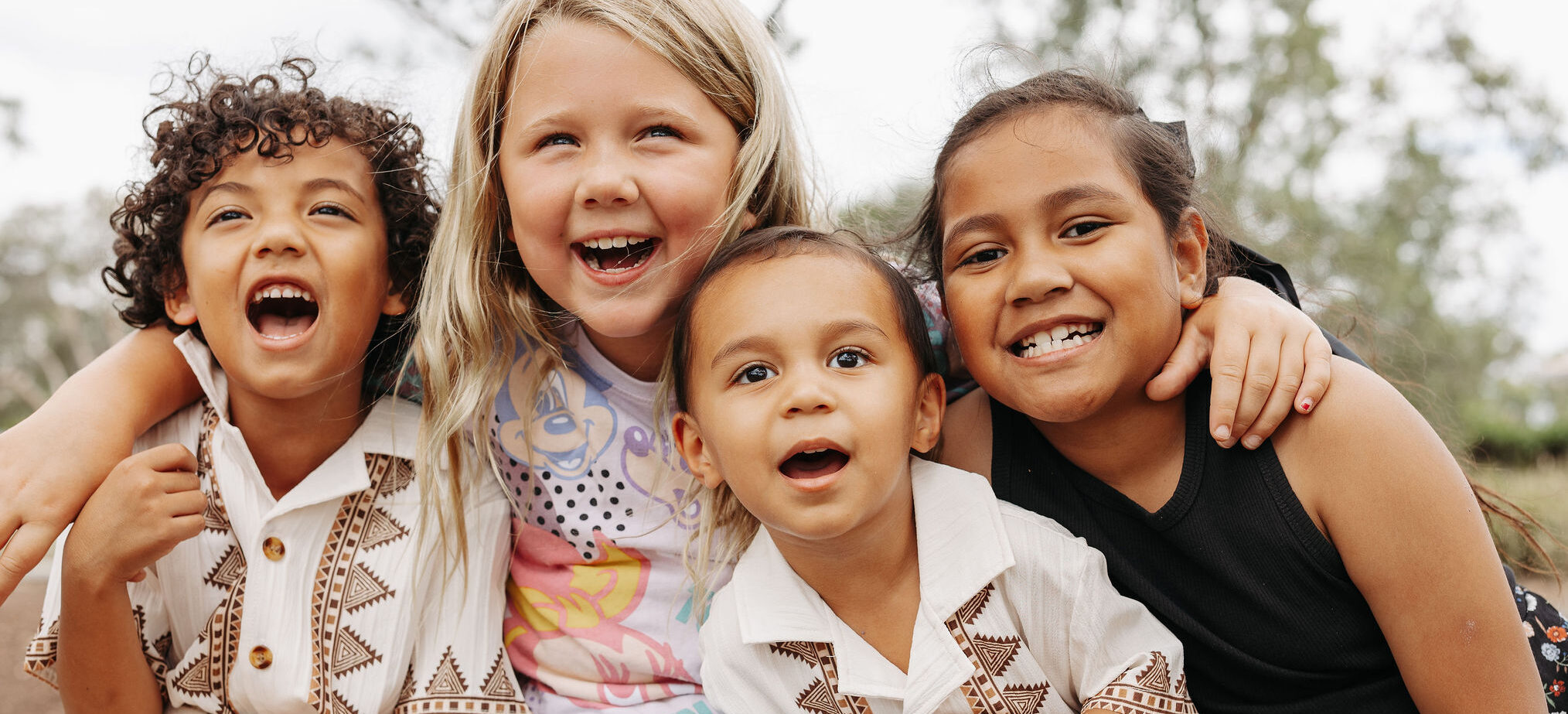
All hubs prioritise relationship-building with expectant mothers and families, understanding that trust and rapport are essential for engagement and effective care.

Logan’s First 2000 Days Model identifies 5 evidence-based initiatives, and 5 enablers of systems change that support the critical early years of a child’s life. By intentionally stacking and connecting these initiatives and enablers, we can create an early childhood development system that is accessible to all children – generating and amplifying life-changing impact.
The community co-designed First 2000 Days Model helps bring the outcomes and impacts identified in our Collective Plan to life. Our Roadmap then describes the indicators that show whether we are making progress in line with our shared vision.
Click on the 5 evidence-based initiatives and 5 enablers of systems change in the model to explore more.
Culturally safe, responsive maternity and child development support – from pregnancy to early parenting.
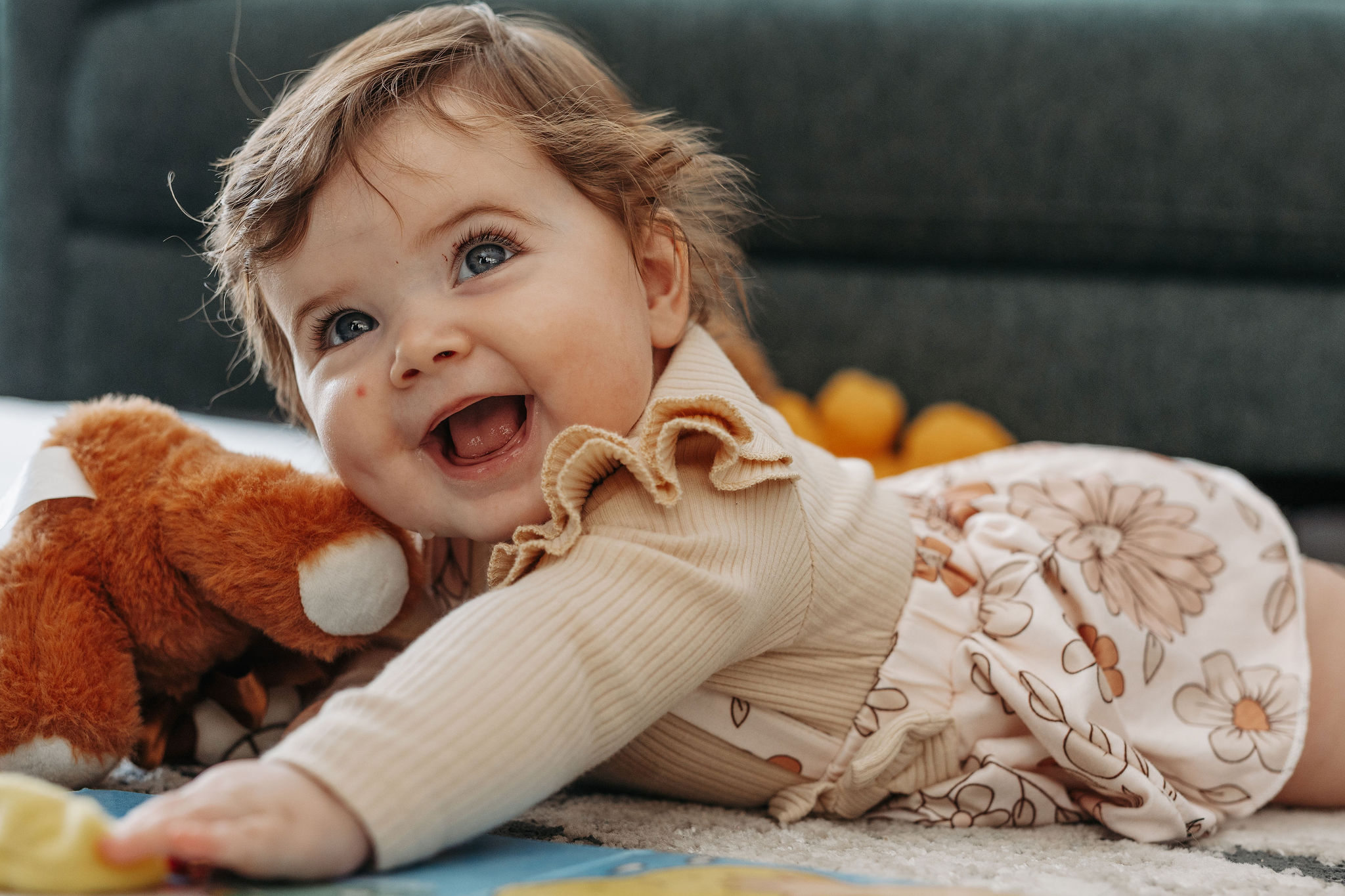
MACH Hubs provide culturally safe, locally delivered maternity and child health care for Logan families. Designed by community, for community, the hubs offer support that is respectful, trusted, and responsive to the unique needs of Logan’s diverse families.
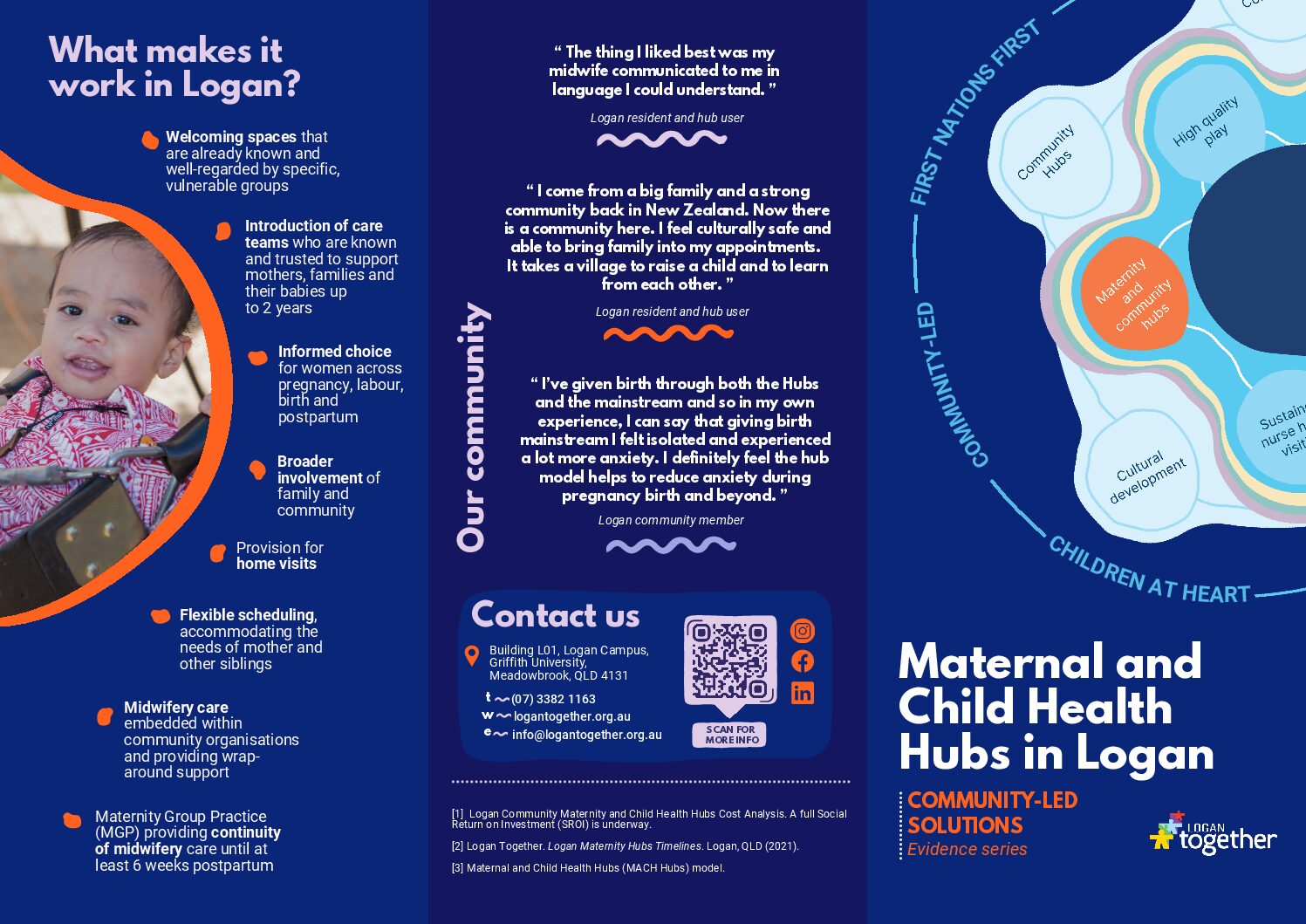
MACH Hubs are welcoming spaces that offer:
Each MACH Hub is shaped by the strengths of its local community and is a core part of Logan’s First 2000 Days Model, which focuses on setting children up for a strong, healthy start to life.
Logan’s MACH Hubs are located in inclusive local Community Hubs. A dedicated midwife provides one-on-one care throughout the pregnancy and birth, offering continuity of care. A supportive Community Liaison Officer walks alongside the parents and the child for the whole journey, from pre-birth to age 6 weeks. At this point, the women, parents and the child are welcomed into the Community Hub to continue the connections and support as required. The Community Liaison Officer is a MACH Hub Connector, providing warm referrals to social supports and services in a wrap-around response which can organically unfold across the life course.

In 2015, Logan families, service providers, and community leaders raised urgent concerns about the safety, access, and cultural appropriateness of maternity care in the region.
By 2017, 28% of Logan women were not meeting WHO minimum standards for antenatal care1. First Nations people as well as families not eligible for Medicare and newly arrived immigrants were missing care due to cost, lack of trust, or cultural barriers. Logan had one of the lowest antenatal attendance rates in Queensland. Stillbirth rates were above the state average.
These gaps meant many women missed vital care, with long-term consequences for their own health and their babies’ development. MACH Hubs were created to change this.
The first 1000 days of life, beginning in pregnancy, establish the patterns for future life outcomes. Sadly, the cost of getting this wrong has had profound implications for both the health system and for the families of Logan over decades. In 2015, women in the Logan region had one of the lowest rates of antenatal attendance across Queensland and were far less likely to engage with mainstream health services.
Holistic family-centred care can provide hope. International evidence reveals the benefits of midwifery continuity of care as having a positive effect on every health outcome for mothers and babies, including reducing pre-term birth. Early up-take of antenatal care typically provides opportunity and hope for young lives. When consulted, community members identified a need for improved relationships with care providers, cultural safety, holistic engagement, and support to address practical barriers to accessing healthcare. 2
[1] Queensland perinatal data collection, 2017. The WHO updated guidelines in 2017 recommend that expectant mothers have at least eight antenatal visits.
[2] Alliman J, Bauer K, Williams T. Freestanding Birth Centers: An Evidence-Based Option for Birth. J Perinat Educ. 2022 Jan 1;31(1):8-13.
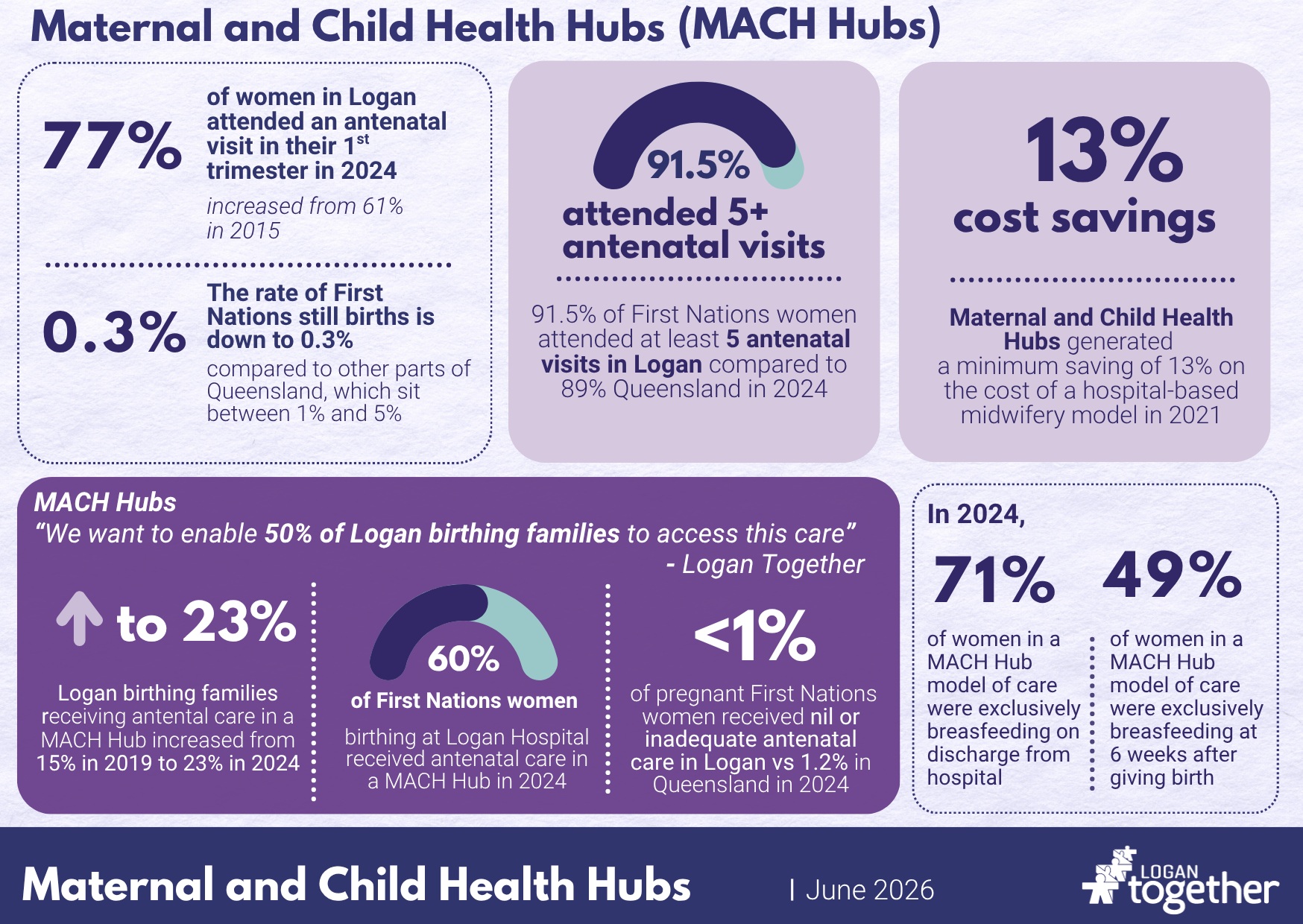
Maternal and Child Health Hubs bring antenatal, maternity and early-years support closer to families in the communities where they live. The latest outcomes show strong engagement with antenatal care, improved access for First Nations families and meaningful savings compared with hospital-based models of care.
A multi-method evaluation of the MACH hubs [3] in Logan in 2020 identified the following outcomes:
Women in Maternity Group Practice were statistically significantly more likely to:
• attend 5 or more antenatal appointments
• undergo antenatal psychosocial screening
• receive an influenza vaccine
• have a spontaneous onset of labour
• have a vaginal non-instrumental birth
• use non-pharmacological pain relief
• exclusively breastfeed
All hubs prioritise relationship-building with expectant mothers and families, understanding that trust and rapport are essential for engagement and effective care.
The hubs offer an integrated care model, coordinating care across a range of health and social care professionals to offer holistic support.
While the hubs share core functions, they have flexibility to adapt to the diverse cultural and social needs of the Logan community. The flexibility allows for unique community-driven services.
A locally driven partnership that ensures services are not only relevant to the community but also sustainable and responsive to its needs.
A core collaborative team of midwives, obstetricians, CLOs, Child Health, social Workers and Hub managers work together with a commitment to providing continuity of care across the first 2000 days.
Clinically Designed Spaces: Each hub ensures that clinical rooms are equipped for maternal care, providing a professional, supportive environment for health service delivery.
Inclusive and culturally sensitive the hubs foster an inclusive culture, ensuring that all families, particularly those from vulnerable groups, feel welcomed. The environment and staff approach are culturally sensitive and non-judgmental.
Each hub acknowledges the importance of addressing social determinants of health, such as housing, financial insecurity, and domestic and family violence, to improve maternal and child outcomes.
MACH Hubs are continually evolving to meet the needs of Logan families. The vision for MACH Hubs in Logan is to be sustainably funded to keep meeting those needs. Key opportunities include:

MACH Hubs in Logan face capacity constraints due to lack of space or clinical suitability and lack of sustained funding into Connector roles.
All materials are free to download, print, and share.


Logan’s First 2000 Days Model identifies 5 evidence-based initiatives, and 5 enablers of systems change that support the critical early years of a child’s life. By intentionally stacking and connecting these initiatives and enablers, we can create an early childhood development system that is accessible to all children – generating and amplifying life-changing impact.
The community co-designed First 2000 Days Model helps bring the outcomes and impacts identified in our Collective Plan to life. Our Roadmap then describes the indicators that show whether we are making progress in line with our shared vision.
Click on the 5 evidence-based initiatives and 5 enablers of systems change in the model to explore more.
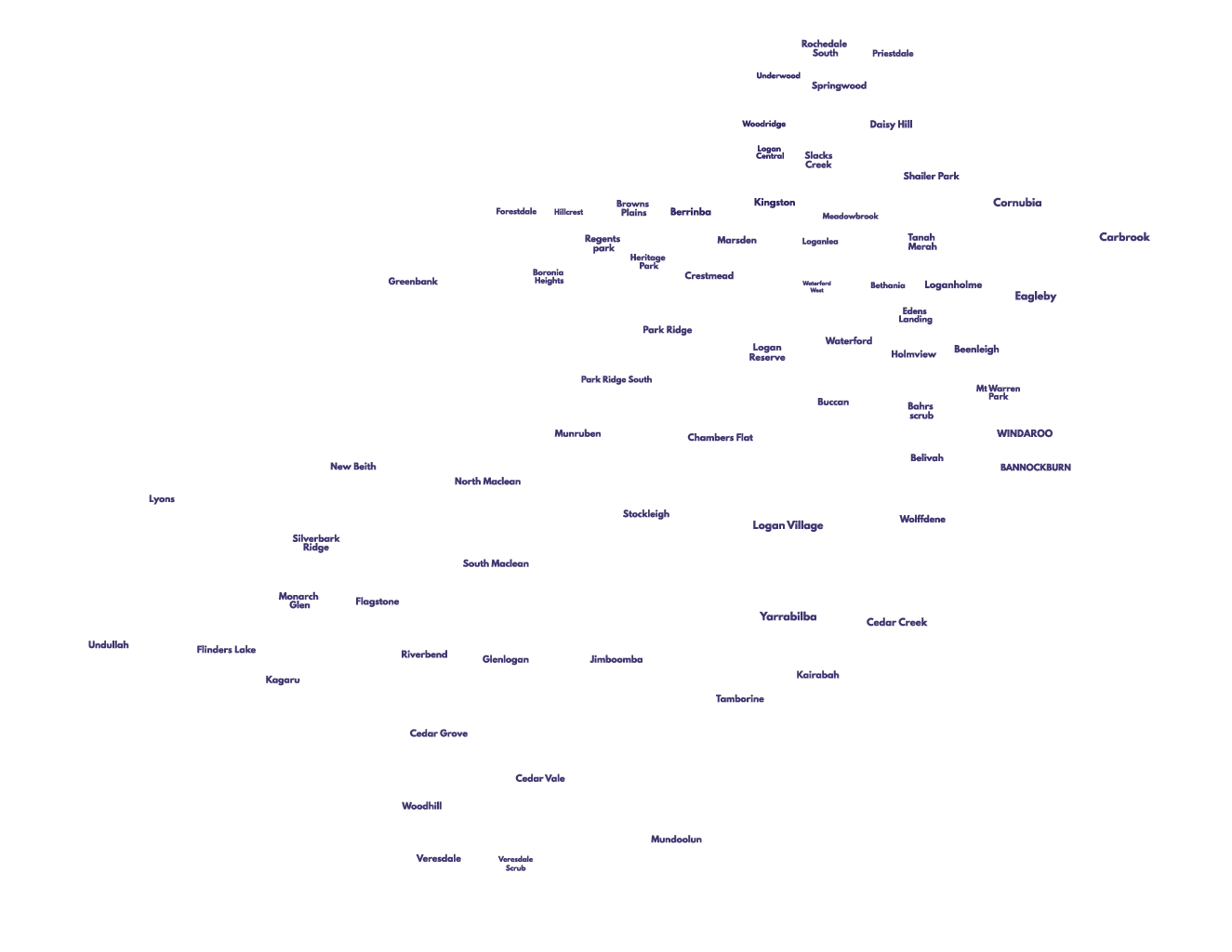
Logan Together supports five Focus Communities unique yet connected through the Logan Together Backbone Team and a Focus Community Network.
Three Focus Communities are geographic – identified by place, and Two Focus Communities are cultural – cultural connections that are woven throughout Logan.
Tap an area to highlight it, then use the button to open its page.