How We Listen, Plan andMeasure Success
At Logan Together, our work is guided by community voices and focused on creating real change for children and families.
Understanding, Measurement, Evaluation, and Learning Journey
At Logan Together, understanding, measuring, evaluation and learning (UMEL) is not something that only happens at the end of the work. It is part of how we listen, learn, plan, act and keep improving with community.
Our work is guided by the voices of children, families and community, alongside data that helps us understand what is changing across Logan. Together, these help us see what matters most, where progress is happening and where we need to keep focusing our collective effort.
This page helps explain Logan Together’s evaluation journey — from listening deeply to community, to shaping shared priorities, building the Roadmap and using evidence and learning to guide collective action.
Listening to Community
1000 Voices
Logan Together’s journey began by listening deeply to the people of Logan through the 1000 Voices initiative.
Families, children, young people, community members and local partners shared their stories, hopes, strengths and ideas for the future. These voices helped build a shared understanding of what children and families in Logan need to thrive.
This listening was not a one-off activity. It became part of how Logan Together works: creating ways for community voice, local knowledge and lived experience to help shape decisions, priorities and action.
Developing the Collective Plan
Splash!
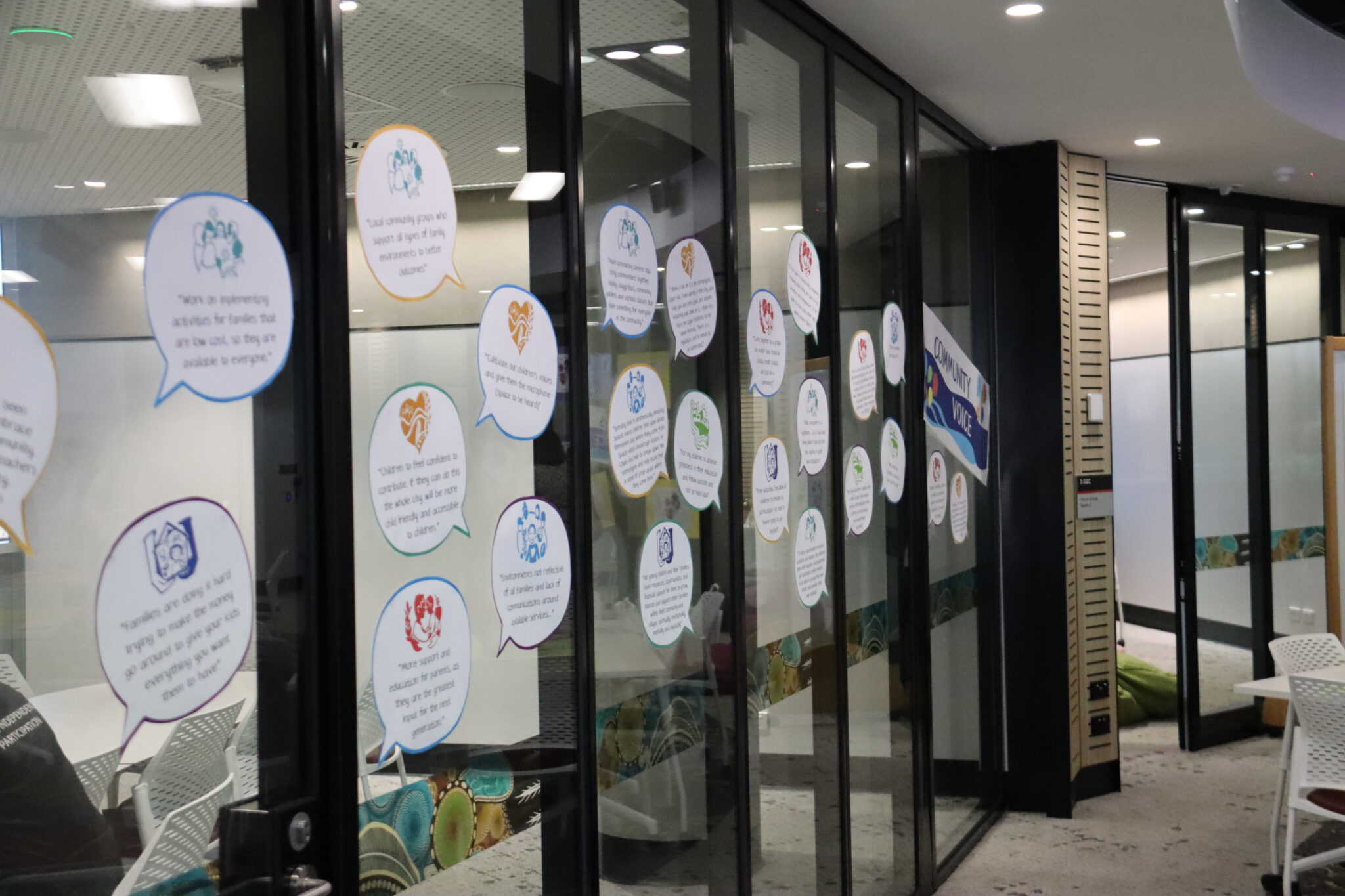
Community members, partners and leaders came together to look at what had been heard through voice collection, alongside population data, service data and local knowledge.
This came together at Splash!, a major community planning event where Logan’s shared priorities were shaped.
Together, community and partners identified what mattered most for Logan’s children and families, what success would look like, and how we would know if we were on the right track.
This became the Community Collective Plan, which sets out the shared goals, priorities and signs of progress that continue to guide Logan Together’s work.
Shaping the Theory of Change and our Measurement, Evaluation, and Learning Approach
Logan Together uses a dynamic and adaptable approach to UMEL that helps us understand both the outcomes we are working towards and the learning happening along the way.
This means looking at the big picture, while also paying attention to what is being learned through local action, community voice, partner experience and systems change.
The evaluation framework brings together several key pieces of work.
Theory of Change
Our Theory of Change explains how Logan Together’s work is expected to contribute to long-term change for children and families.
It shows the connection between what we do, what changes in the short and medium term and the longer-term impact we are working towards.
The Theory of Change helps us stay clear about why the work matters, how change is expected to happen, and what we need to keep learning along the way.
U-MEL Strategy
Our U-MEL Strategy brings together Logan Together’s approach to Understanding, Measurement, Evaluation and Learning.
It helps keep evaluation practical and useful, so that information is not just collected but used to guide decisions, improve practice and strengthen the work over time.
U-MEL supports a way of working where data, community voice, stories, reflection and evidence all have a role in helping us understand what is changing and what needs to happen next.
Key Evaluation Questions
How is Logan Together influencing systems change?
How well is Logan Together implementing Logan’s First 2000 Days and Focus Communities Strategies?
What is the benefit of the Logan Together approach?
Translating the Collective Plan into a Roadmap
Logan Together Roadmap
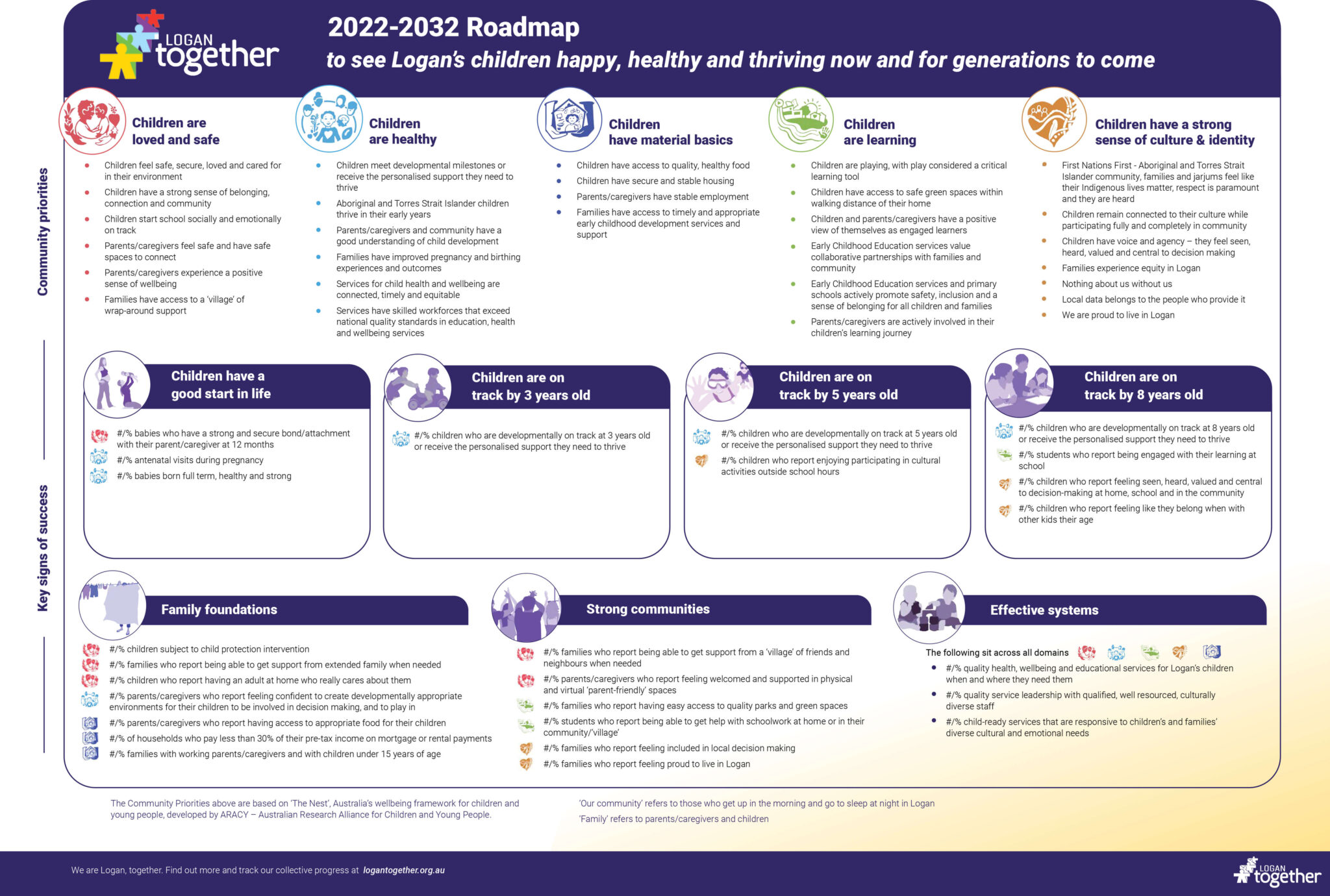
The Collective Plan was then translated into the Logan Together Roadmap.
The Roadmap is a more technical guide that shows how we track collective progress over time. It sets out the key indicators we use to understand children’s lives, family wellbeing, service systems and broader community conditions.
It helps us see where change is happening, where more attention is needed, and how our shared actions are contributing to long-term outcomes for children and families.
The Roadmap supports learning and accountability, helping Logan Together and our partners keep improving as the work grows.
Measuring Progress
Logan Together measures progress by bringing together different types of information.
- community voice and lived experience
- population-level data
- service and partner data
- local stories, insights and learning
- indicators connected to the Roadmap
- reflections from community, partners and governance groups
Together, these sources of information help us understand not only whether change is happening, but how and why change is happening.
It also helps us notice where progress is strong, where things are stuck, and where we need to adapt our collective effort.

Definition of “Data”: Information collected, shared, and used by partners and the community to understand progress, identify needs, and guide collective action that improves outcomes for children, families, and community.
Why we collect data
At Logan Together, data is the information we gather from community, services, research and public sources to help us understand what matters most. Combined with community voice, it helps guide decisions that improve outcomes for children and families across Logan.
Collecting and using data allows us to:
- Monitor progress for children and families across Logan.
- Learn directly from community and services.
- Make evidence-informed decisions.
- Measure the impact of our work.
- Share what we’re learning with our partners and community.
- Be accountable and transparent.
What kind of data does Logan Together collect?
Logan Together brings together four main types of data, each helping us understand and improve the experiences of children, families, and the community.
Community Data
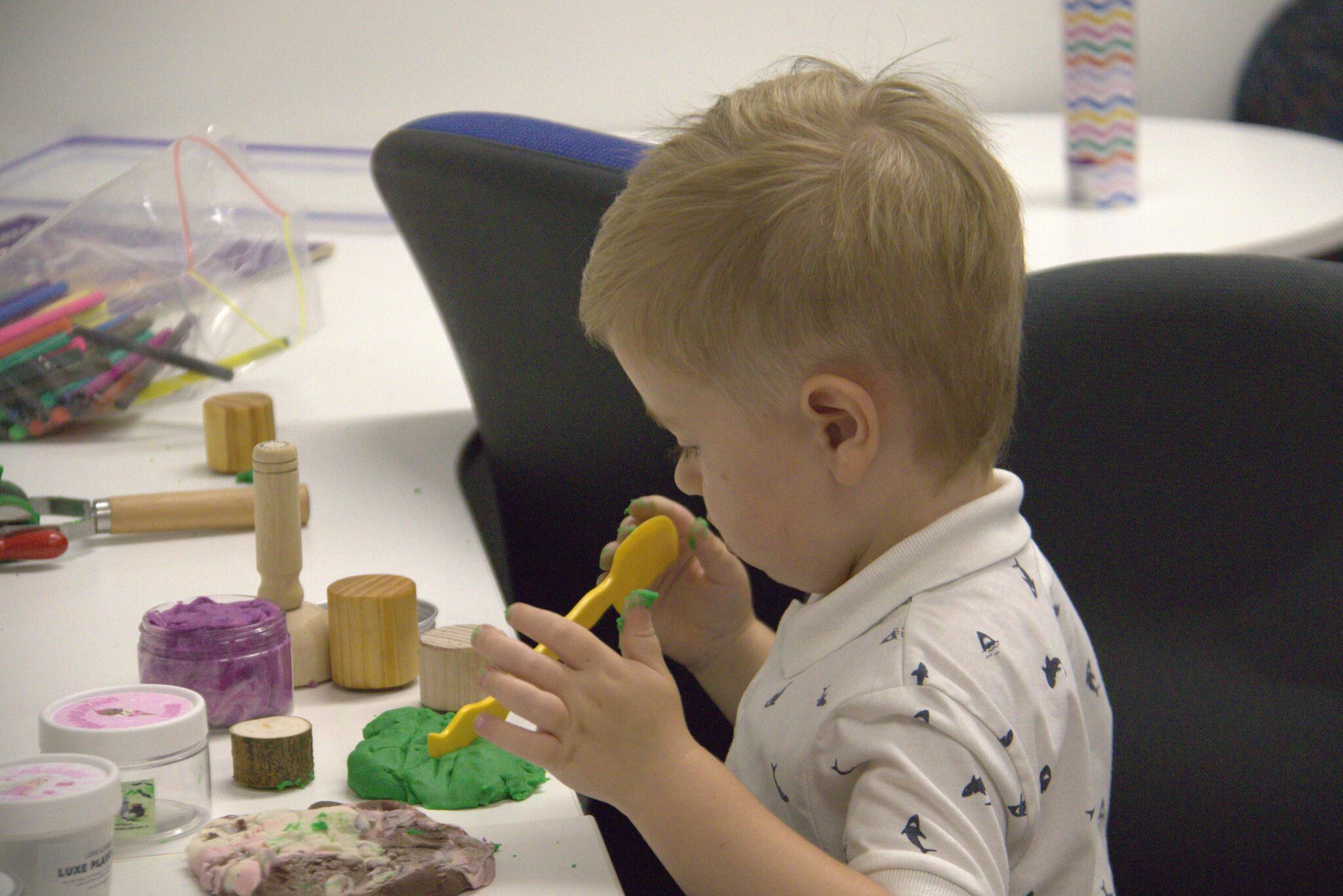
We collect information directly from community members through surveys, focus groups, event participation and photos or videos. This helps ensure we hear from a representative sample of families and children.
Service-Level Data
This data comes from our network of service providers and may include participation figures, service activity and program outcomes. It helps us understand how families are engaging with local services and community hubs.
Population Data
Aggregated statistics from public sources and administrative records show big-picture trends. This data tells the story of Logan and highlights areas where support is most needed.
Research Data
We use existing research and partner with universities or research institutions to gain deeper insights into specific issues affecting children and families in Logan.
How do we keep data safe?
We follow clear data security and privacy practices. This means we:
- Always obtain explicit consent before collecting data
- Limit collection to only what’s necessary
- Store data securely on password-protected platforms
- De-identify results and never share personal information with third parties
How do we handle First Nations data?
We are guided by the AIATSIS Code of Ethics for Aboriginal and Torres Strait Islander Research:
- First Nations communities manage their own data.
- We work with the Gnirigomindala Karulbo for guidance on First Nations data.
- We commit to self-determination, cultural safety and respectful use of First Nations voices and stories.
What do we do with the data?
- Learn what is working and where change is happening.
- Measure the impact of programs, partnerships and collective action.
- Inform planning and decision-making.
- Share progress with community, partners and funders.
Resource Hub
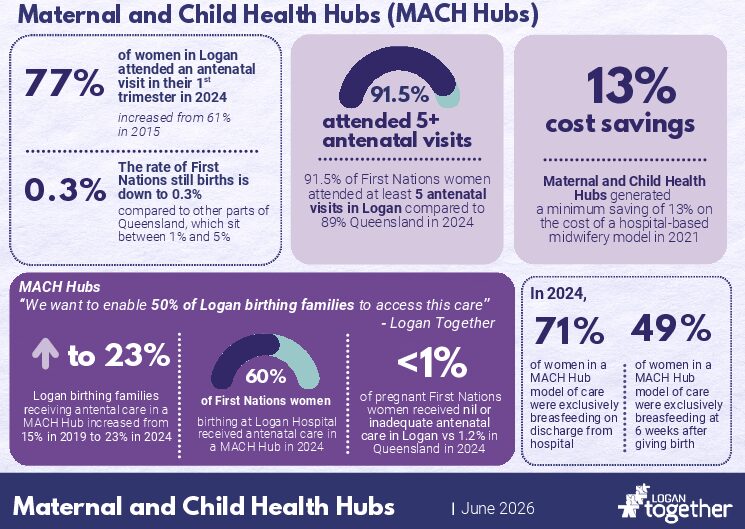
Community Data Cards
Data Cards bring together key outcomes, insights and progress from across Logan Together’s work. They provide a snapshot of what is changing for children, families, communities and systems, drawing on local data, program results and community-led initiatives.
Videos
Explore Logan's First 2000 Days Model
What is Logan's First 2000 Days Model?
Logan’s First 2000 Days Model identifies 5 evidence-based initiatives, and 5 enablers of systems change that support the critical early years of a child’s life. By intentionally stacking and connecting these initiatives and enablers, we can create an early childhood development system that is accessible to all children – generating and amplifying life-changing impact.
The community co-designed First 2000 Days Model helps bring the outcomes and impacts identified in our Collective Plan to life. Our Roadmap then describes the indicators that show whether we are making progress in line with our shared vision.
Click on the 5 evidence-based initiatives and 5 enablers of systems change in the model to explore more.




Explore the Focus Communities
Who are the Focus Communities
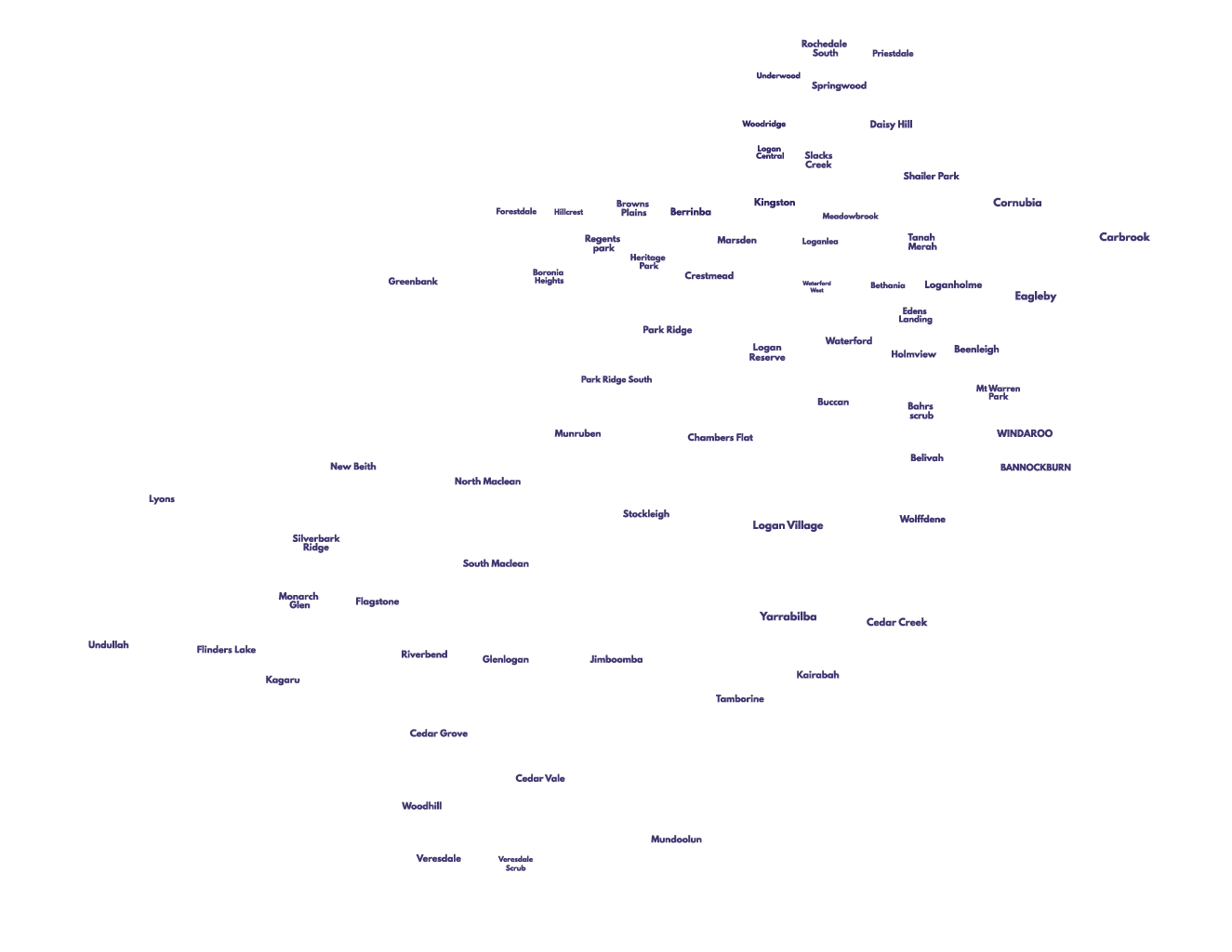
Logan Together supports five Focus Communities unique yet connected through the Logan Together Backbone Team and a Focus Community Network.
Three Focus Communities are geographic – identified by place, and Two Focus Communities are cultural – cultural connections that are woven throughout Logan.
Tap an area to highlight it, then use the button to open its page.