
Navigate Logan's First 2000 Days Model
What is Logan's First 2000 Days Model?
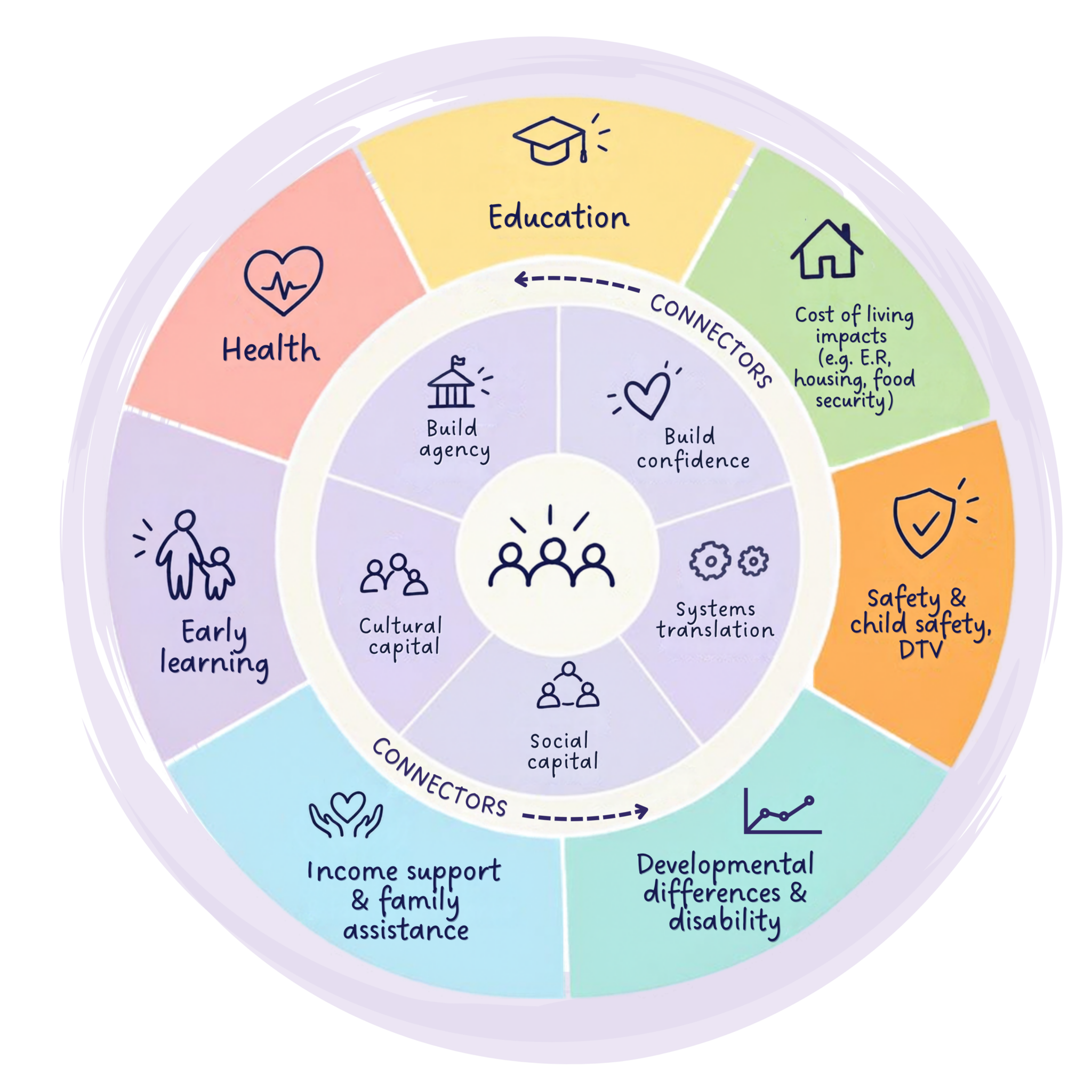
Logan’s First 2000 Days Model identifies 5 evidence-based initiatives, and 5 enablers of systems change that support the critical early years of a child’s life. By intentionally stacking and connecting these initiatives and enablers, we can create an early childhood development system that is accessible to all children – generating and amplifying life-changing impact.
The community co-designed First 2000 Days Model helps bring the outcomes and impacts identified in our Collective Plan to life. Our Roadmap then describes the indicators that show whether we are making progress in line with our shared vision.
Click on the 5 evidence-based initiatives and 5 enablers of systems change in the model to explore more.




Community Connectors
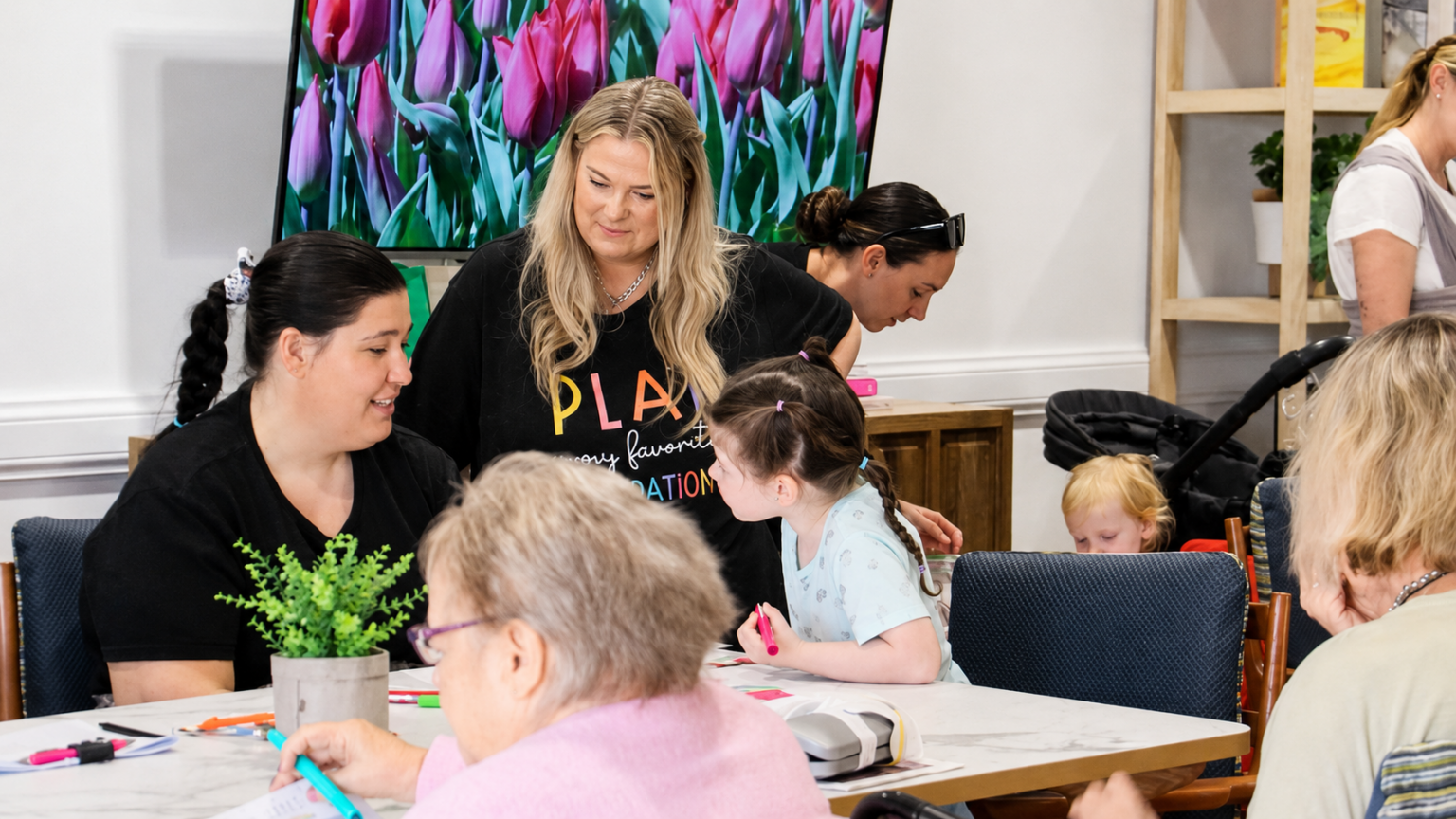
Walking alongside Logan families to connect them with the right support, at the right time.
What Are Community Connectors?
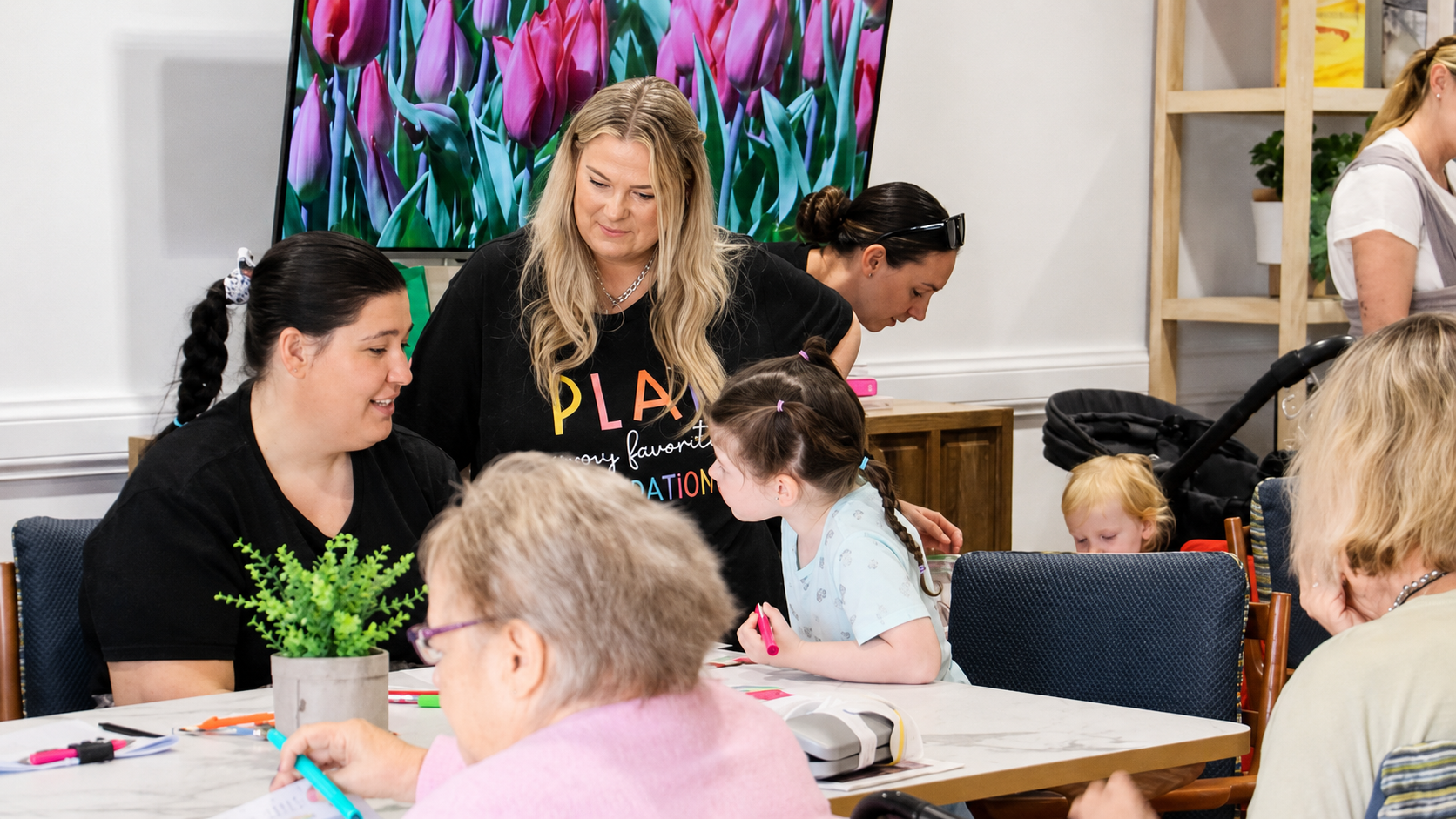
Community Connectors are trusted local community members who guide families, build bridges and smooth transitions between community and services, making navigating complex systems easier. Community Connectors:
- build relationships with families, understand their situation, share information and connect families with the right support
- build bridges and smooth out transitions between systems and ‘hardly heard’ community members, moving beyond systems navigation
- identify needs, offer social prescriptions, and provide wraparound health and wellbeing supports within the culturally safe environment of Community Hubs.
Logan’s Connectors sit outside systems such as the health or education system. Their lived experience helps them focus on the priorities of the families they work with, while supporting them to engage with those systems. In 2025, Logan Together established the Network for Connectors to create shared learning, peer relationships, practice development and to harness their experience for systems change advocacy.
The impact of Community Connectors in Logan
Community Connectors are now seen as an essential part of community-based teams, making it easier for families to find their way and feel supported.
In Logan, we have learned that service investment alone is not enough. Families also need trusted people who can help them understand, access and stay connected to the right support. Connectors do more than increase service uptake. They support early intervention and sustained engagement, helping improve outcomes for families and reducing the likelihood of higher-cost interventions over time.
An evaluation of the Community Connector role (commissioned by Communities for Children, Logan) found:
- Families gain a better understanding of child development and the child healthcare system
- Connectors help reduce family anxiety
- Connectors strengthen the sector by sharing knowledge about service gaps and issues
Due to the connector work in Maternal and Child Health Hubs, there has been a 48% decrease in the number of birth parents receiving nil or inadequate care since 2021.
Why Community Connectors matter
The system of social supports in Australia is complex, siloed and designed by governments and institutions that often fail to adequately consider and resource equitable access to services.
Families in Logan need people who understand their lived experience and can walk beside them, translating and facilitating.
Families told us systems were confusing and difficult to navigate, and that some families were falling through the cracks as they didn’t know about services, so the roles were shaped through co-design to meet real family needs in Logan. Connectors provide support that is tailored to the needs of the family considers the breadth of their wellbeing needs and joined up across various service systems. They often share cultural understanding with the families they help, which builds trust and rapport.
Connectors are often part of local community hubs, offering support in safe and welcoming spaces where families already feel comfortable. Being in familiar, accessible locations helps families engage confidently and get the help they need.
Each family is supported by a single Connector throughout their journey, ensuring consistent guidance, trust, and connection over time.
Community Connectors do more than connect families with services. They build and strengthen the relationships that help the whole early years system work better – connecting families with services, services with one another, communities with government, knowledge with practice, and culture with mainstream systems.
Through these relationships, Connectors are becoming an important part of Logan’s social infrastructure. They help information, trust and support move more effectively across community and service systems, creating a more connected, responsive and culturally informed network around children and families.
Support can range from short, casual conversations to long-term, intensive guidance, helping families build understanding, confidence, and connection to the right services.
The Universal Elements of Community Connectors in Logan
Advocacy Capabilities
Confidence to work in the ‘grey zone’
Two-way Learning
Relationships First Approach
Rich Social and Cultural Capital
Deep connections to community
Deep Pastoral Orientation: ‘going beyond’
Problem solving skills at a systems level
Focus on families and children’s needs
Capacity to build agency
Providing unconditional positive regard
Adaptability
Translation between systems and families
Logan Together’s vision for the future of Community Connectors
At Logan Together, we are creating a permanent, formalised and visible Community Connector workforce for the future. Our partners have come together to co-design a fully integrated approach. This model will both strengthen and support the Community Connectors in their critical work and will enable systems advocacy underpinned by the evidence for change.
This involves:
- Building an enabling ecosystem that includes secure employment, professional and cultural supervision, sustainable workloads, and continuous professional learning.
- Establishing qualitative and quantitative processes for capturing data on the impact of Connectors.
- Pursuing opportunities for investment into the System of Connectors in Logan.
By strengthening this workforce, Logan Together can demonstrate a model of equity that honours children’s rights, supports families and offers a framework that can be shared across Australia.
The Challenges for Logan’s Community Connectors
Connectors face several challenges as they support families:
High workloads:
Many Connectors have heavy caseloads.
Unequal and unpredictable resourcing:
Funding comes from multiple partners, affecting staff retention and continuity of care.
Multifaceted roles:
Connectors balance family support, community engagement, services engagement and program delivery.
Hidden demand:
Families aren’t waitlisted when Connectors are at capacity.
Increasing crisis support:
Rising economic pressures increase urgent support needs.
Coordination relies on partnerships:
Limited and uncertain funding means asking partners for support.
Who’s Involved
Community Connectors are part of a partnership across Logan’s health, education, and community organisations.











Resource Hub
A one-stop place for families and partners:

Videos
Logan Elders Connectors
Community Quotes
How to get involved

Join
If you are a Community Connector in Logan, join the Network of Connectors.

Connect
Contact us to get in touch with a Local Community Connector.
Explore Logan's First 2000 Days Model
What is Logan's First 2000 Days Model?
Logan’s First 2000 Days Model identifies 5 evidence-based initiatives, and 5 enablers of systems change that support the critical early years of a child’s life. By intentionally stacking and connecting these initiatives and enablers, we can create an early childhood development system that is accessible to all children – generating and amplifying life-changing impact.
The community co-designed First 2000 Days Model helps bring the outcomes and impacts identified in our Collective Plan to life. Our Roadmap then describes the indicators that show whether we are making progress in line with our shared vision.
Click on the 5 evidence-based initiatives and 5 enablers of systems change in the model to explore more.
Explore the Focus Communities
Who are the Focus Communities
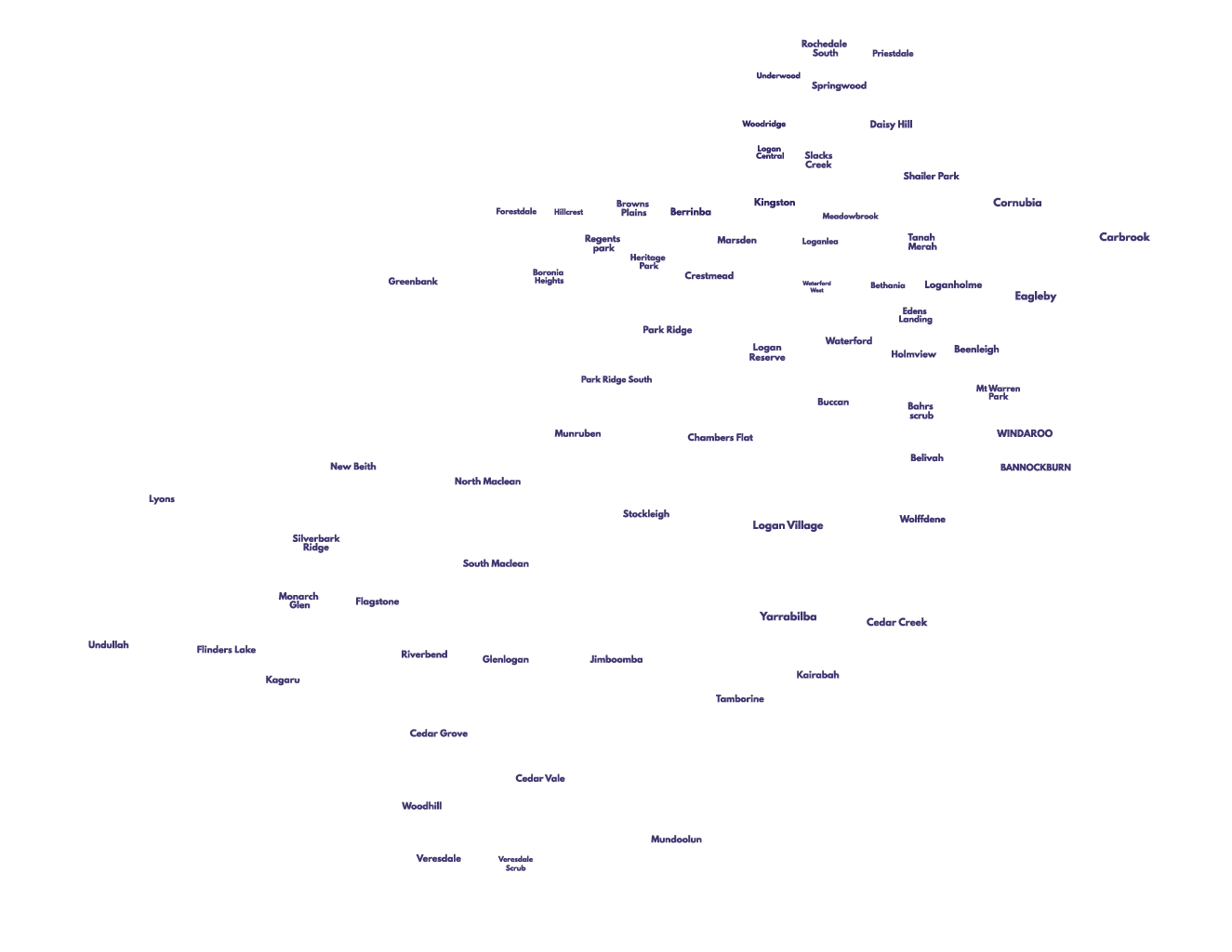
Logan Together supports five Focus Communities unique yet connected through the Logan Together Backbone Team and a Focus Community Network.
Three Focus Communities are geographic – identified by place, and Two Focus Communities are cultural – cultural connections that are woven throughout Logan.
Tap an area to highlight it, then use the button to open its page.