
Navigate Logan's First 2000 Days Model
What is Logan's First 2000 Days Model?
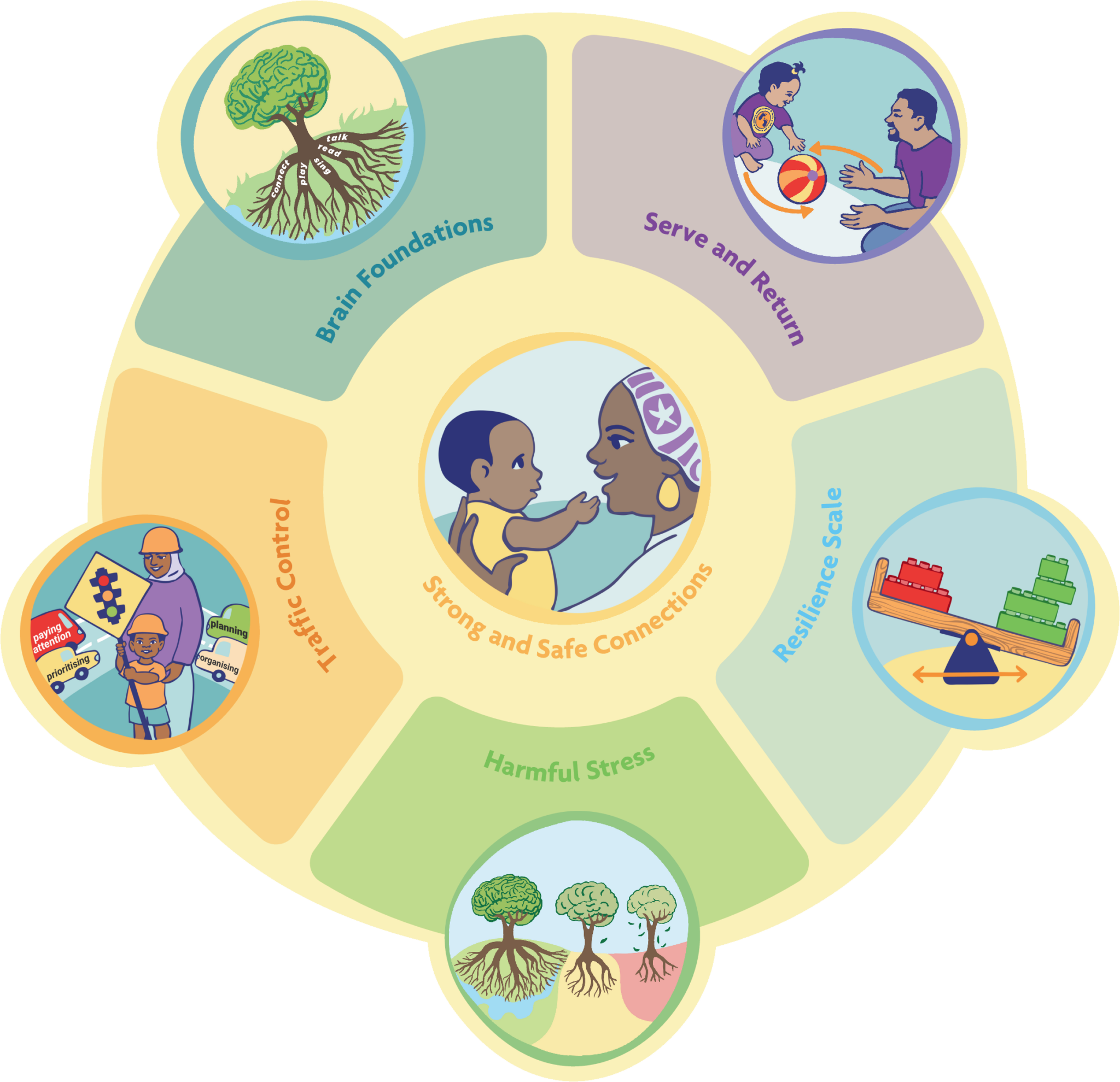
Logan’s First 2000 Days Model identifies 5 evidence-based initiatives, and 5 enablers of systems change that support the critical early years of a child’s life. By intentionally stacking and connecting these initiatives and enablers, we can create an early childhood development system that is accessible to all children – generating and amplifying life-changing impact.
The community co-designed First 2000 Days Model helps bring the outcomes and impacts identified in our Collective Plan to life. Our Roadmap then describes the indicators that show whether we are making progress in line with our shared vision.
Click on the 5 evidence-based initiatives and 5 enablers of systems change in the model to explore more.




Brain Buildingin Logan
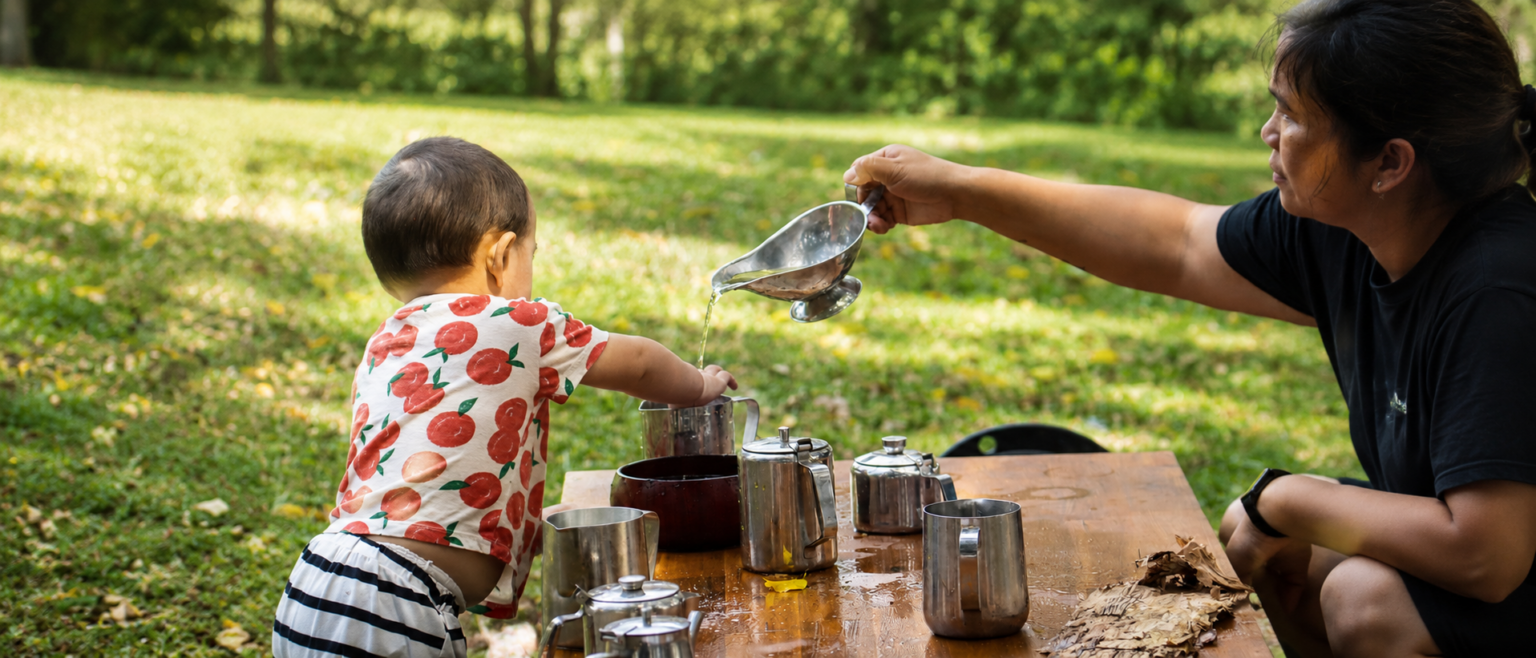
Together, we’re growing strong, healthy, resilient children - starting with the brain.
What is Brain Building in Logan?
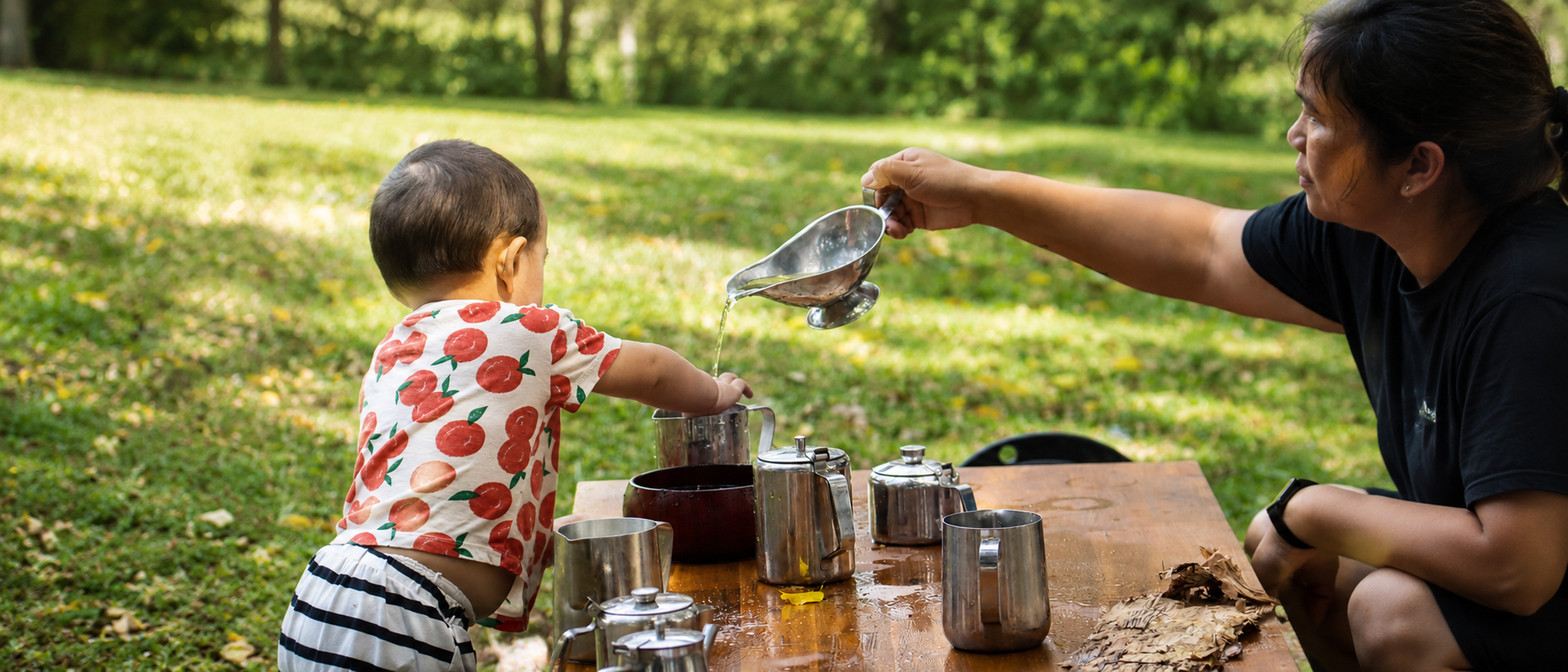
Brain Building helps the Logan community understand how children’s brains grow and how we, as parents, caregivers, community members, and people who work with Logan’s children can help shape strong, healthy, and resilient kids.
The Logan community came together to co-design a shared language for brain development. Our goal was simple: translate complex neuroscience into practical language and tools that support families in Logan.
The co-design team developed the shared language and understanding for brain building and then tested this within their communities. The shared language was refined to become as accessible as possible for Logan’s people, to allow for translation and interpretation by different cultural and community groups.
Brain Building for Logan was co-designed by a diverse group of Logan residents, First Nations leaders, Pasifika and Māori parents, people with lived experience of mental ill health, and service providers – supported by neuroscience experts.
The impact of Brain Building in Logan
The key Brain Building metaphors have been rippling out across the Logan community and workforces through members of the co-design team. At least 700 people in Logan have engaged in conversations with brain builders and it’s growing every day.
A co-design team member who works with families and children in a secondary mental health service used the resilience scale to help a child and their family understand barriers to attending school and consider what would help support their return to school.
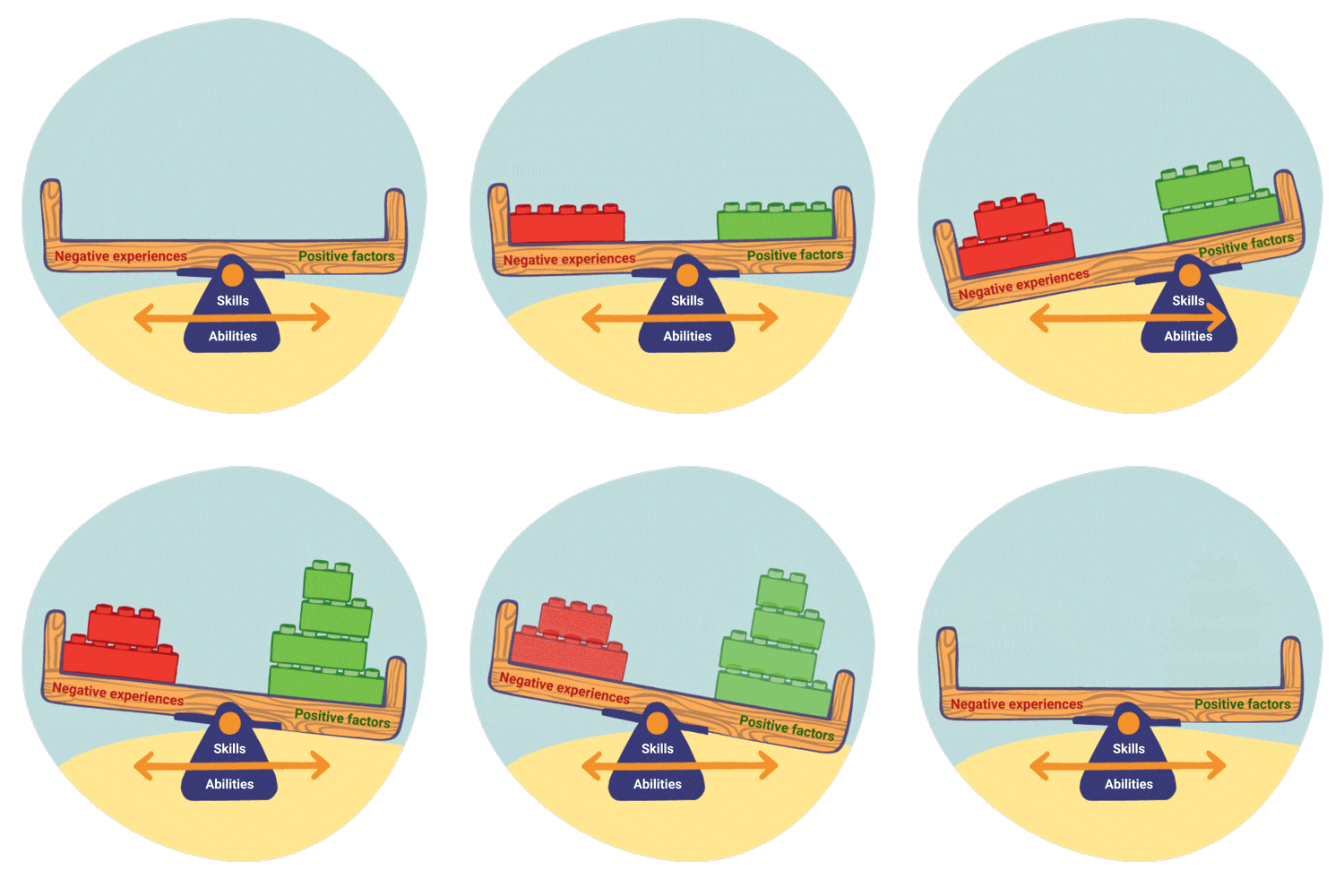
They used objects including rocks and a ruler to represent the resilience scale in an interactive way to support the child and mother’s understanding. The resilience scale helped the child and family to reduce a very big concept into red blocks (negative experiences) and green blocks (positive supports), thinking about what it might look like for the child if school was to feel better. This helped the practitioner find out more about the family’s story that had not been disclosed but were barriers to regular school attendance.
The ‘river of life’ model was used to turn the red and green blocks into a story that was culturally appropriate for the child and their family. It allowed a narrative to unfold about what was on the riverbank that was protective, and what was in the mountains that the child feared leaving to go to school.
The engagement and support for the family helped to identify that the mother’s anxiety was a factor in the child not wanting to leave her and go to school, and so the mother was able to begin seeking mental health support, whilst also learning that the language she used to support a return to school was important.
The co-design team member translated the resilience scale and the experience of the family for the school.
The child, family, school and multidisciplinary health team are all speaking the same language now and are aligned on the return to school plan for the child. As a result, the child is now attending school and fully engaged.
Why Brain Building Matters
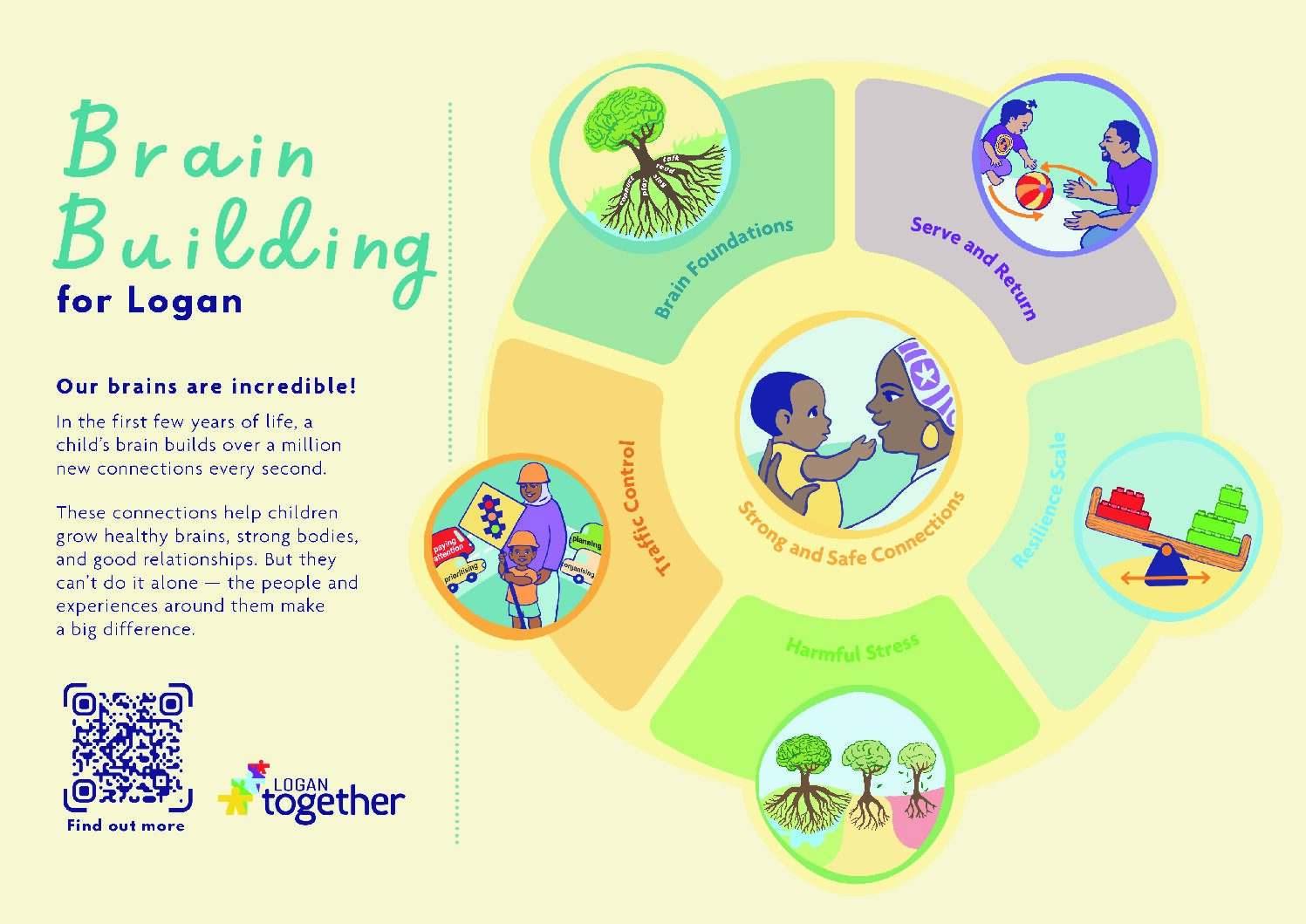
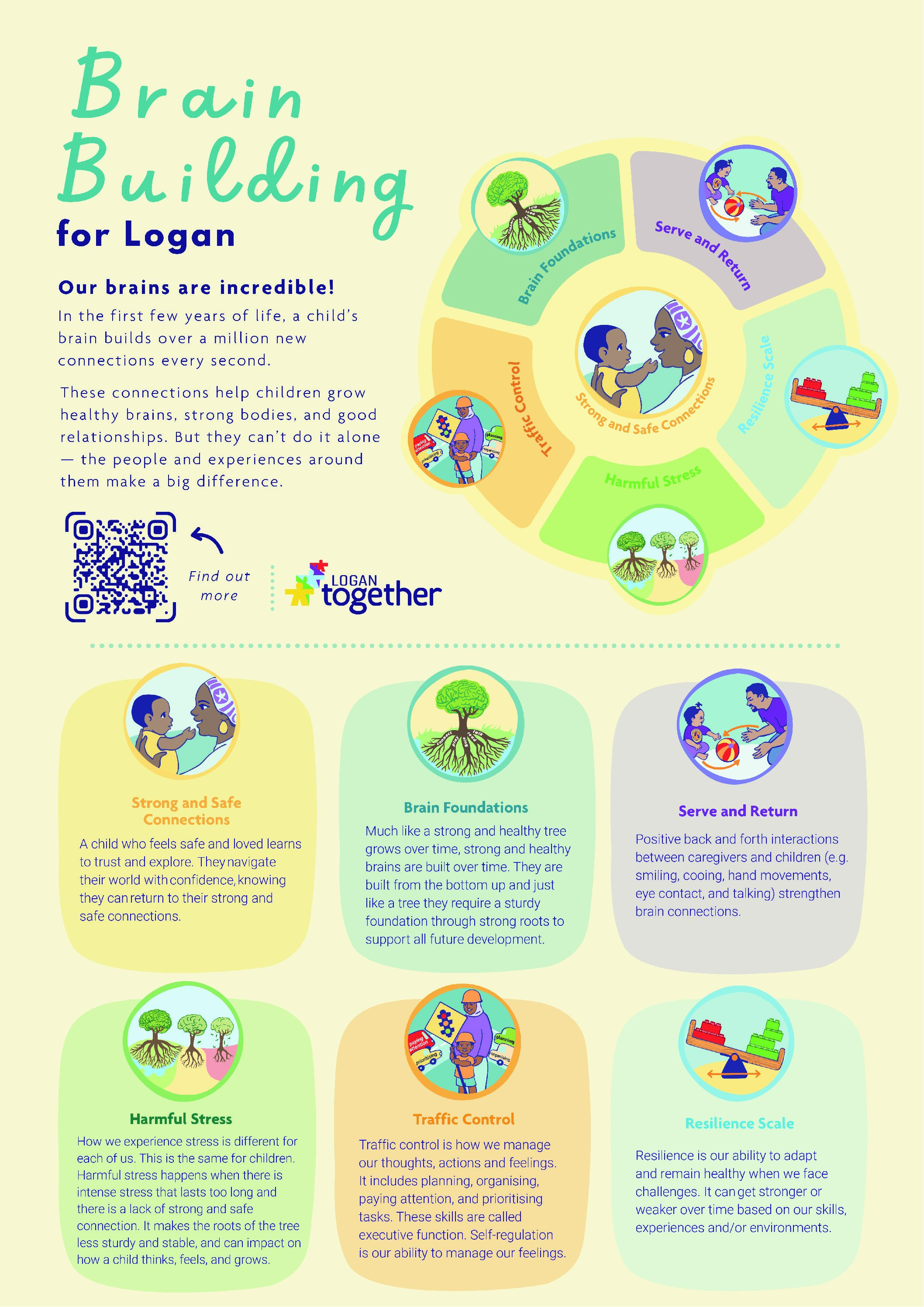
Our brains are incredible! Pregnancy and childhood are critical stages for lifelong wellbeing. In the first few years of life, a child’s brain builds over a million new connections every second. These connections help children grow healthy brains, strong bodies, and good relationships. But they can’t do it alone – the people and experiences around them make a big difference.
We are all brain builders, from community members, parents and carers through to those that design and fund services and opportunities for others.
Every time we learn a little bit more about young brains, we become better equipped to support children and their families, as well as the communities, workforces and systems around them. Doing this will give children and families in Logan the best chance to thrive and create a healthier community, now and into the future.
The universal elements of Brain Building
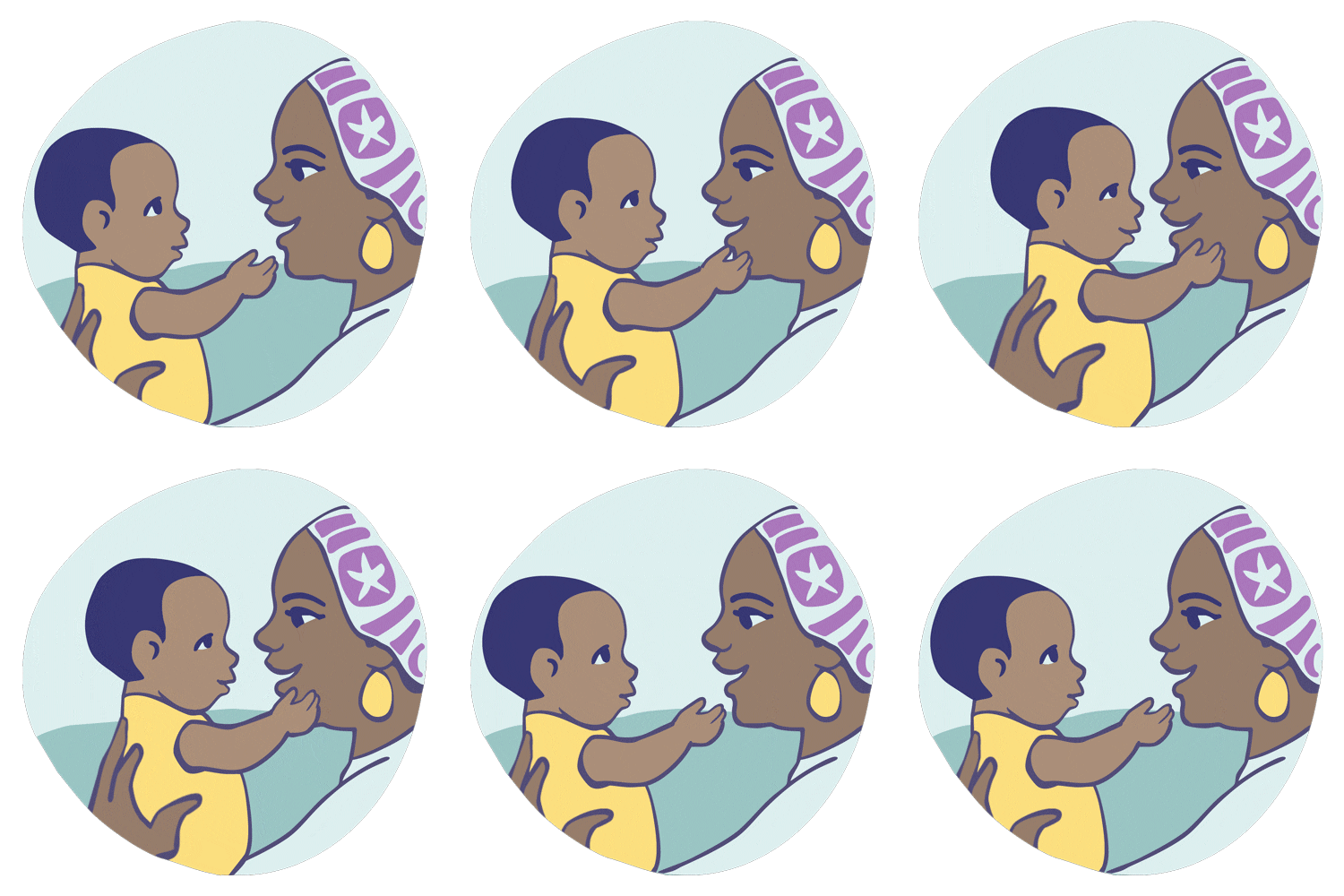
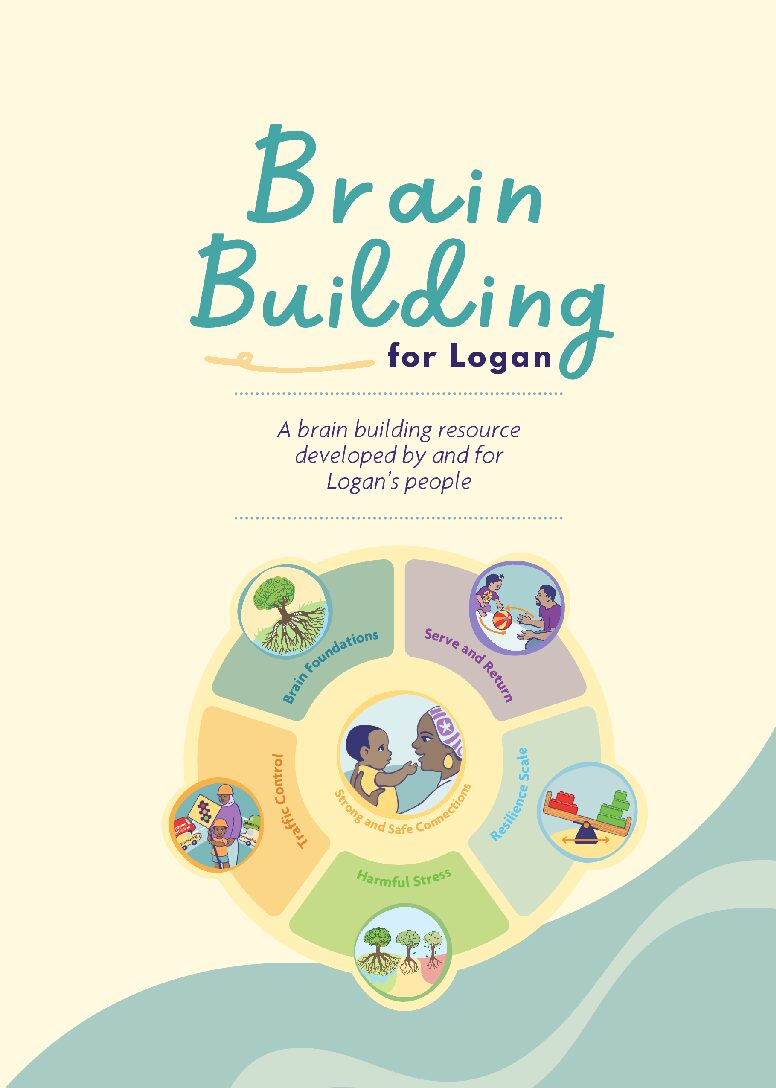
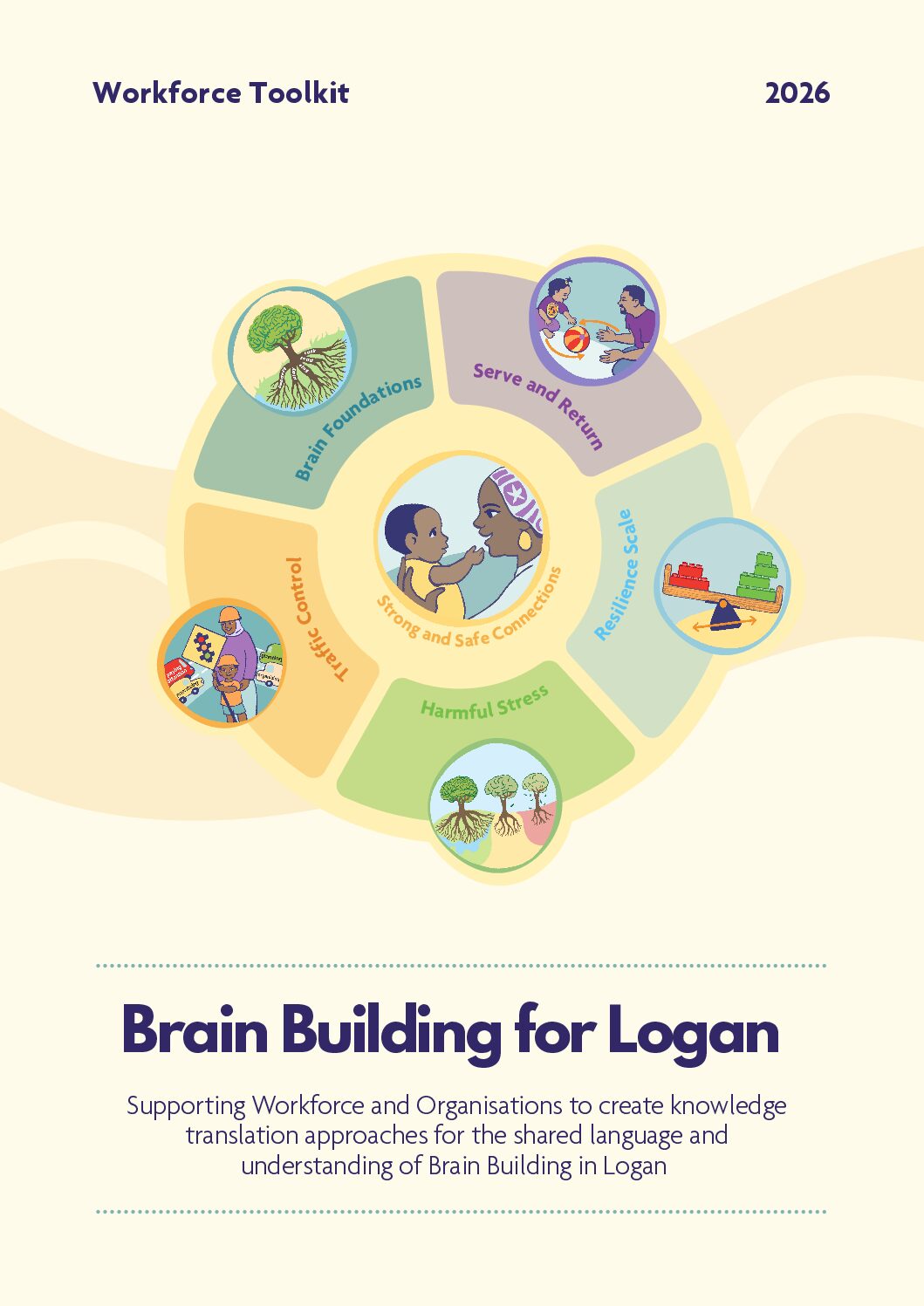
Strong and Safe Connections
A child who feels safe and loved learns to trust and explore. They navigate their world with confidence, knowing they can return to their strong and safe connections.
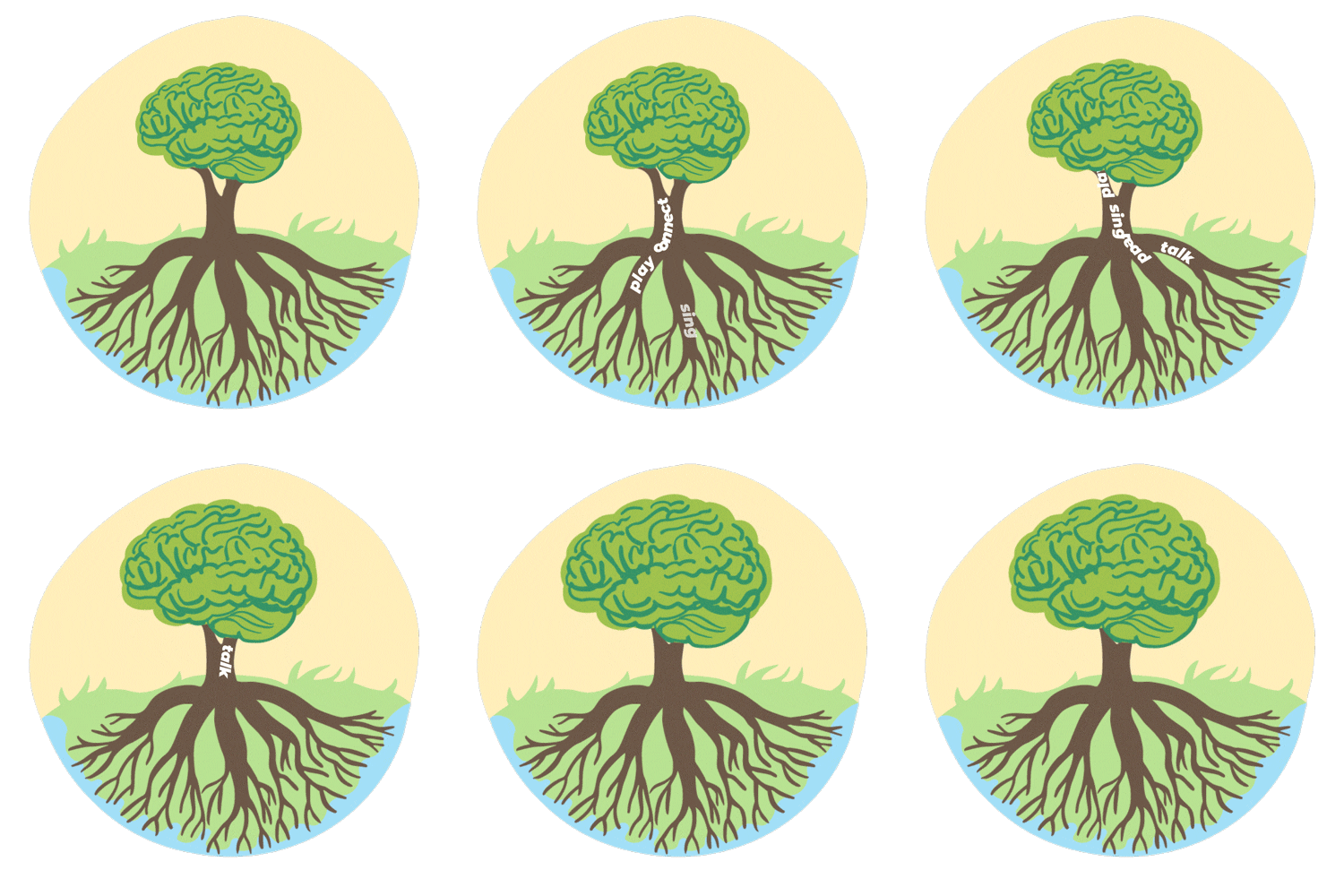
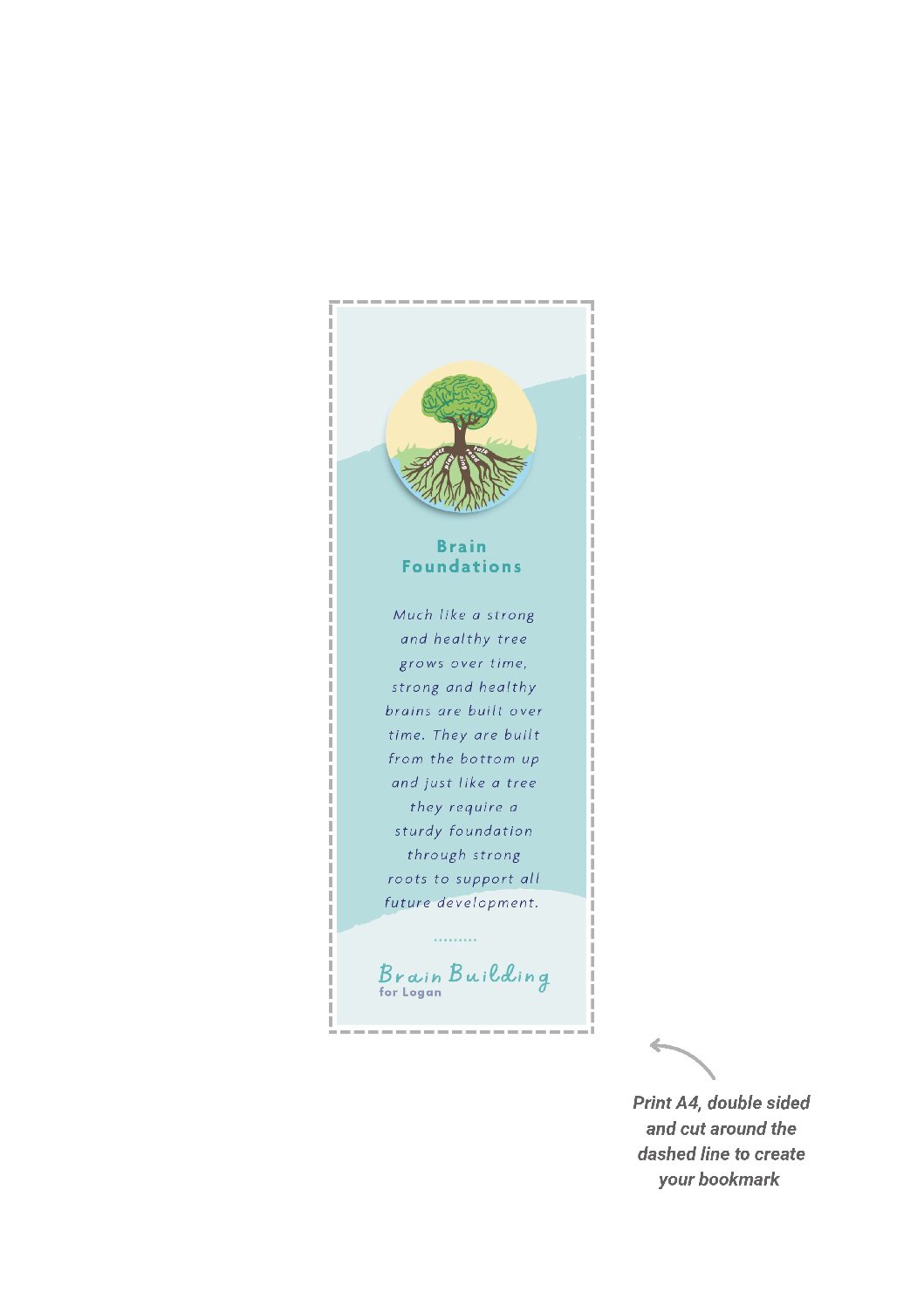
Brain Foundations
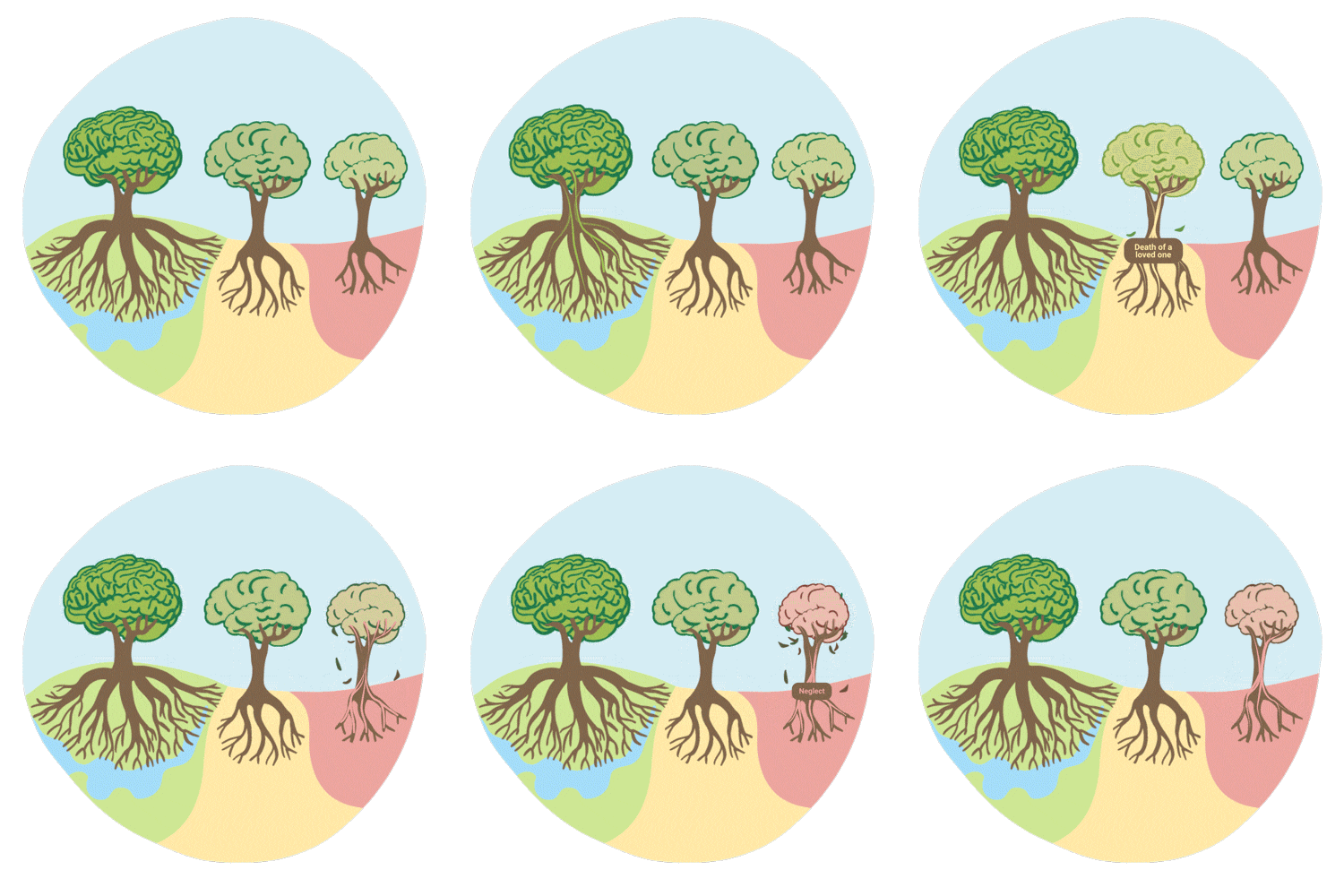
Much like a strong and healthy tree grows over time, strong and healthy brains are built over time. They are built from the bottom up and just like a tree they require a sturdy foundation through strong roots to support all future development.
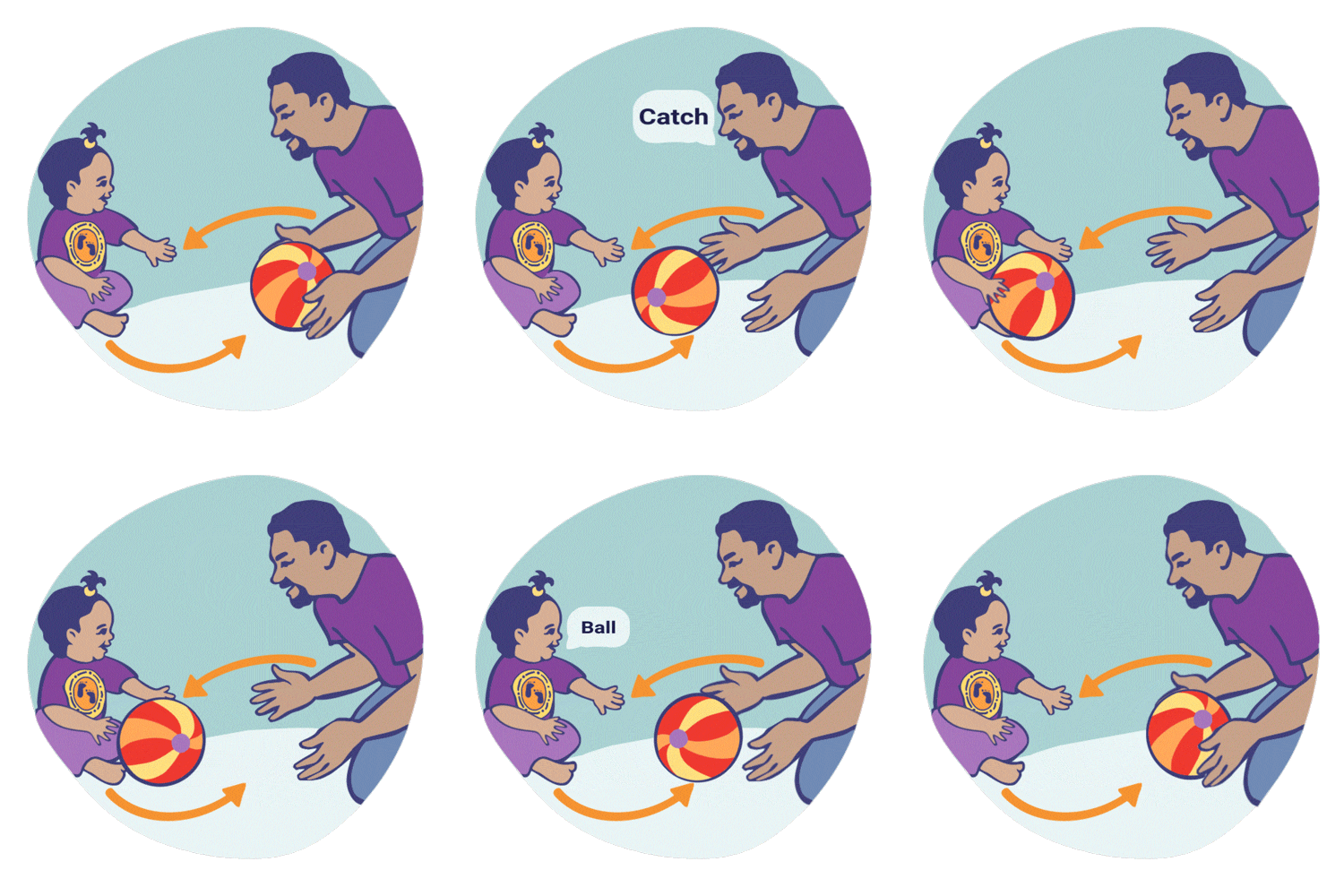
Serve and Return
Positive back and forth interactions between caregivers and children (e.g. smiling, cooing, hand movements, eye contact, and talking) strengthen brain connections.
Harmful Stress
How we experience stress is different for each of us. This is the same for children. Harmful stress happens when there is intense stress that lasts too long and there is a lack of strong and safe connection. It makes the roots of the tree less sturdy and stable, and can impact on how a child thinks, feels, and grows.
Traffic Control
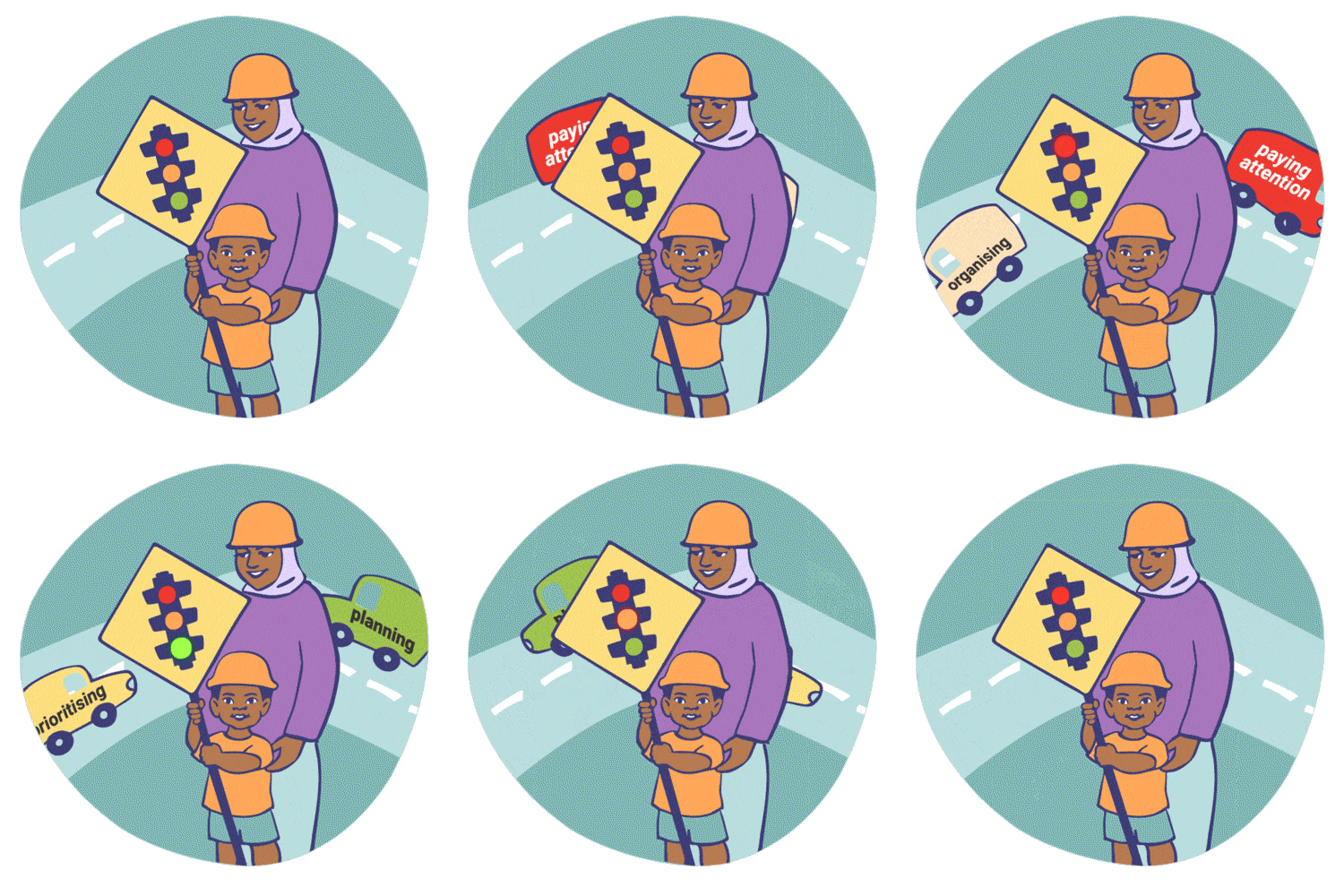
Traffic control is how we manage our thoughts, actions and feelings. It includes planning, organising, paying attention, and prioritising tasks. These skills are called executive function. Self-regulation is our ability to manage our feelings.
Resilience Scale
Resilience is our ability to adapt and remain healthy when we face challenges. It can get stronger or weaker over time based on our skills, experiences and/or environments.
Logan Together’s vision for Brain Building
Those working with and caring for Logan’s children have a deeper understanding and knowledge of neuroscience to support children’s development and wellbeing.
The challenges for Brain Building
No dedicated funding to support the rollout of brain building across workforces in Logan.
Who is involved in Brain Building
We thank the families, community leaders, organisations, services, and funders who are championing early childhood development and embedding brain building principles into everyday practice.
Together, we are aligning effort, strengthening systems and creating lasting change for children and families.
This work is shared — and so is the impact.

Download Brain Building Resources
All resources are free to download, share and use.

Brain Foundations

Resource Hub
Downloads
Explore a range of practical resources designed by and for Logan’s people to support building healthy brains, strong bodies, and good relationships. These resources help families, caregivers, and community members understand how the people and experiences around young children, from pregnancy and beyond, can support the strong and safe connections and sturdy foundations for future development. Downloadable and printable materials including poster, flyers, and guides are available to make it easy to bring these ideas to life at home and in the community.
Videos
Real Stories of Brain Building in Action
How you can get involved in Brain Building

For Families & Carers
Download the Brain Building resources above created by and for the Logan community can support you and your children to thrive at home and in your community.

For Services & Organisations
Use the Enabling Workforces Toolkit to embed brain building into your everyday practice.