
Navigate Logan's First 2000 Days Model
What is Logan's First 2000 Days Model?
Logan’s First 2000 Days Model identifies 5 evidence-based initiatives, and 5 enablers of systems change that support the critical early years of a child’s life. By intentionally stacking and connecting these initiatives and enablers, we can create an early childhood development system that is accessible to all children – generating and amplifying life-changing impact.
The community co-designed First 2000 Days Model helps bring the outcomes and impacts identified in our Collective Plan to life. Our Roadmap then describes the indicators that show whether we are making progress in line with our shared vision.
Click on the 5 evidence-based initiatives and 5 enablers of systems change in the model to explore more.




Sustained Nurse Home Visiting
Relationship-based support for families with complex needs, from pregnancy to parenting.
What is Sustained Nurse Home Visiting?
A relationship-based Australian model of Sustained Nurse Home Visiting (SNHV) was launched in Logan in 2019 and is delivered by highly trained child health nurses and embedded in the universal health service. It takes two forms – maternal and early childhood sustained visiting (MECSH) and Care Coordination. It is specifically targeted to improve outcomes for identified families who are expecting or caring for babies.
The evidence-based program is a parenting and child intervention for families that aims to improve the long-term psychosocial development outcomes of children by building parents’ capacity to provide safe and responsive care and a home environment that supports children’s learning. The intensive program focuses on sleep, safety, parenting styles, and the home environment.
This program is part of a suite of child health service expansion and care coordination in identified Logan communities.
The impact of Sustained Nurse Home Visiting in Logan
88% of parents and carers report greater enablement regarding parenting ability, confidence and coping, as a result of the program.
A national randomised controlled trial of Right@Home in 2021 (722 women across intervention and control groups) found the intervention group reported significantly better mental health outcomes in:
- Depression
- Anxiety
- Stress
- Personal wellbeing
The following effects were noted through the randomised controlled trial when children reached 2 years of age:
- Mothers were more likely to engage in warm parenting practices.
- Mothers were less likely to engage in harsh parenting practices.
- Children were more likely to have a regular bedtime
- There were fewer safety risks at home.
- Mothers were more likely to support their child’s learning.
- Children had more opportunities for varied social interactions with adults.
- Compared to the usual care, mothers were more satisfied with the service and felt more capable as parents.
Why Sustained Nurse Home Visiting Matters
Some families with children who have complex needs require intensive support to successfully parent. This ensures their babies and young children are supported developmentally.
International evidence supports the role of sustained nurse home visiting programs in overcoming disadvantage and adverse life experiences and improving children’s learning and development.
Maternal mental health is crucial for the optimal health of both mothers and children, yet up to 1 in 5 women may experience symptoms of anxiety, depression, or both during pregnancy and/or following birth.
Having a child health nurse and social worker or psychologist visit new parents at home provides support to overcome concerns around child health and parenting, improving the health and wellbeing of both parents and baby.
Program Delivery
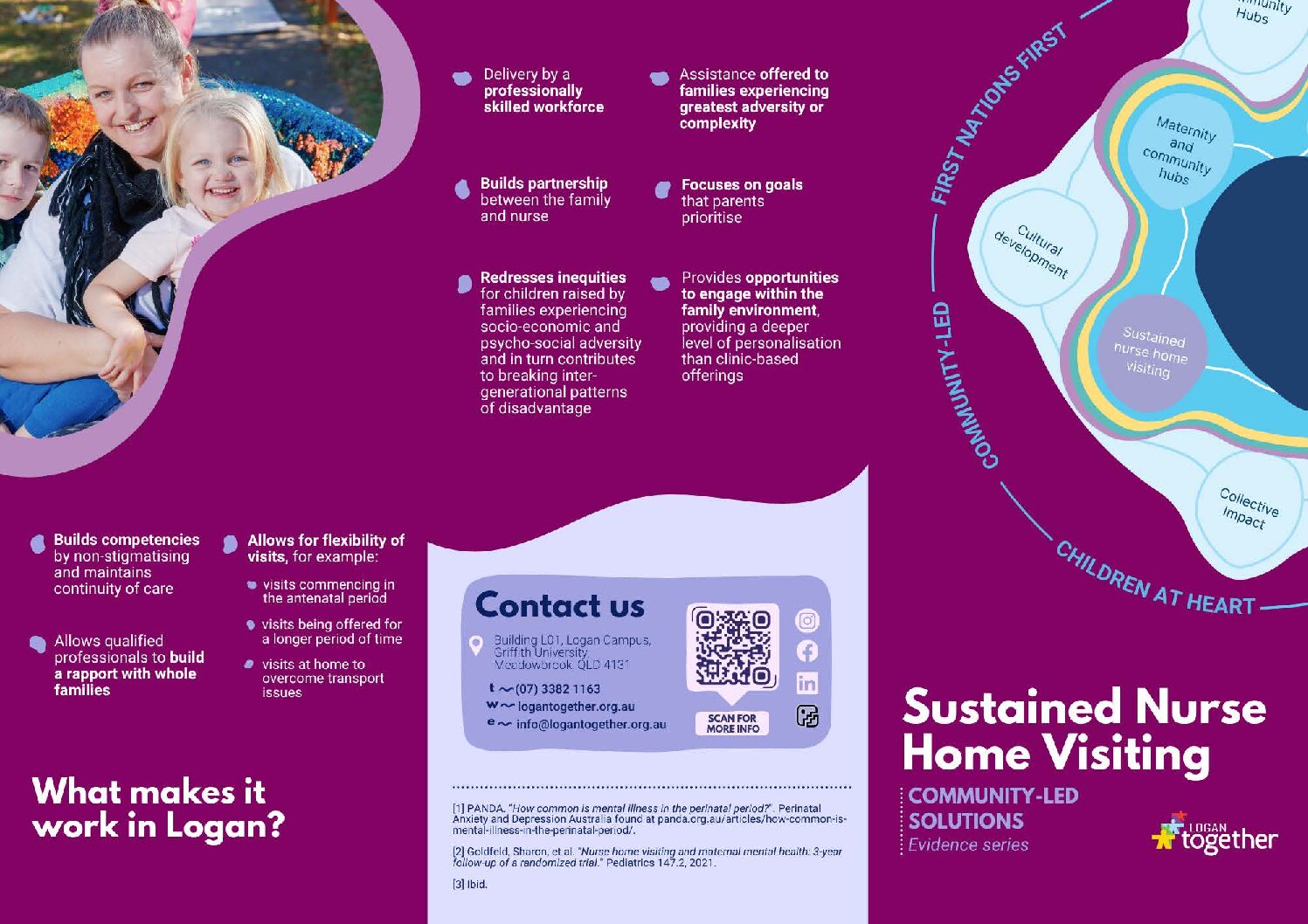
The MECSH program has been specifically targeted to improve outcomes by building parents capacity to provide safe, responsive care and a home environment that supports children’s learning. MECSH has been designed specifically for the Australian and local context – it integrates with, and strengthens, in a sustainable way, the existing universal child and family health system. The program currently provides up to 25 visits from qualified maternal care nurses and social care practitioners to families who are expecting or caring for new babies1.
Midwives and GPs are ideally placed to identify eligible families and refer through usual processes. The Child Health Nurse will assess the family’s needs and work in partnership with the family to assess whether MECSH is suitable, informed by:
- Client preference.
- The results of the Adapt and Self Manage Questionnaire (ASM).
- Clinical judgement of family needs.
- Clinical judgement of the need for improved parental capacity.
- Clinical judgement of the family’s ability to engage in the program.
Eligible families who do not transition to the MECSH program are able to access the full range of other service pathways through Child Health.2
[1] Addendum to the MECSH manual to support the implementation of sustained home visiting, right@home, 2023
[2] Addendum to the MECSH manual to support the implementation of sustained home visiting, right@home, 2023
The universal elements of our Sustained Nurse Home Visiting approaches
The universal elements of the MECSH program have been identified through discussions with the MECSH implementation team and captured through the MECSH addendum to support practitioners in the successful implementation of the MECSH program. The following elements have an important role for success:
Provides safe, flexible and responsive care
Continuity of care until the child is 2 years old
Promotes first relationships, parent attunement and responsivity
Integrated with the existing universal child and family health system
Utilises other key components of the child health service model of care
Including universal parenting groups, fidelity requirements of the program
Supported by universal child and family health system tools, training and resources
Promotes reflective practice and sharing of learnings
Child Health Nurse Community of Practice
Logan Together’s vision for the future of Sustained Nurse Home Visiting
All families in Logan have access to postnatal support that builds their capability and confidence as parents and supports them throughout their parenting journey.
Resource Hub
Community quotes
How You Can Get Involved

For Families & Carers
Learn more about whether MECSH might be available to support you during pregnancy or early parenting.
The best outcomes are achieved when families are first engaged with the Child Health Nurse in the antenatal period, as the Child Health Nurse can refer into the MECSH program.

For Services & Organisations
Refer a family or learn how to integrate MECSH into your community service offering.
Midwives and GPs are ideally placed to identify eligible families and refer through usual processes. The Central Access and Bookings Teams (CABS) will triage all eligible referrals to Clinical Intake Clinicians (CICs). CICs will contact families and arrange an initial appointment.

Explore Logan's First 2000 Days Model
What is Logan's First 2000 Days Model?
Logan’s First 2000 Days Model identifies 5 evidence-based initiatives, and 5 enablers of systems change that support the critical early years of a child’s life. By intentionally stacking and connecting these initiatives and enablers, we can create an early childhood development system that is accessible to all children – generating and amplifying life-changing impact.
The community co-designed First 2000 Days Model helps bring the outcomes and impacts identified in our Collective Plan to life. Our Roadmap then describes the indicators that show whether we are making progress in line with our shared vision.
Click on the 5 evidence-based initiatives and 5 enablers of systems change in the model to explore more.
Explore the Focus Communities
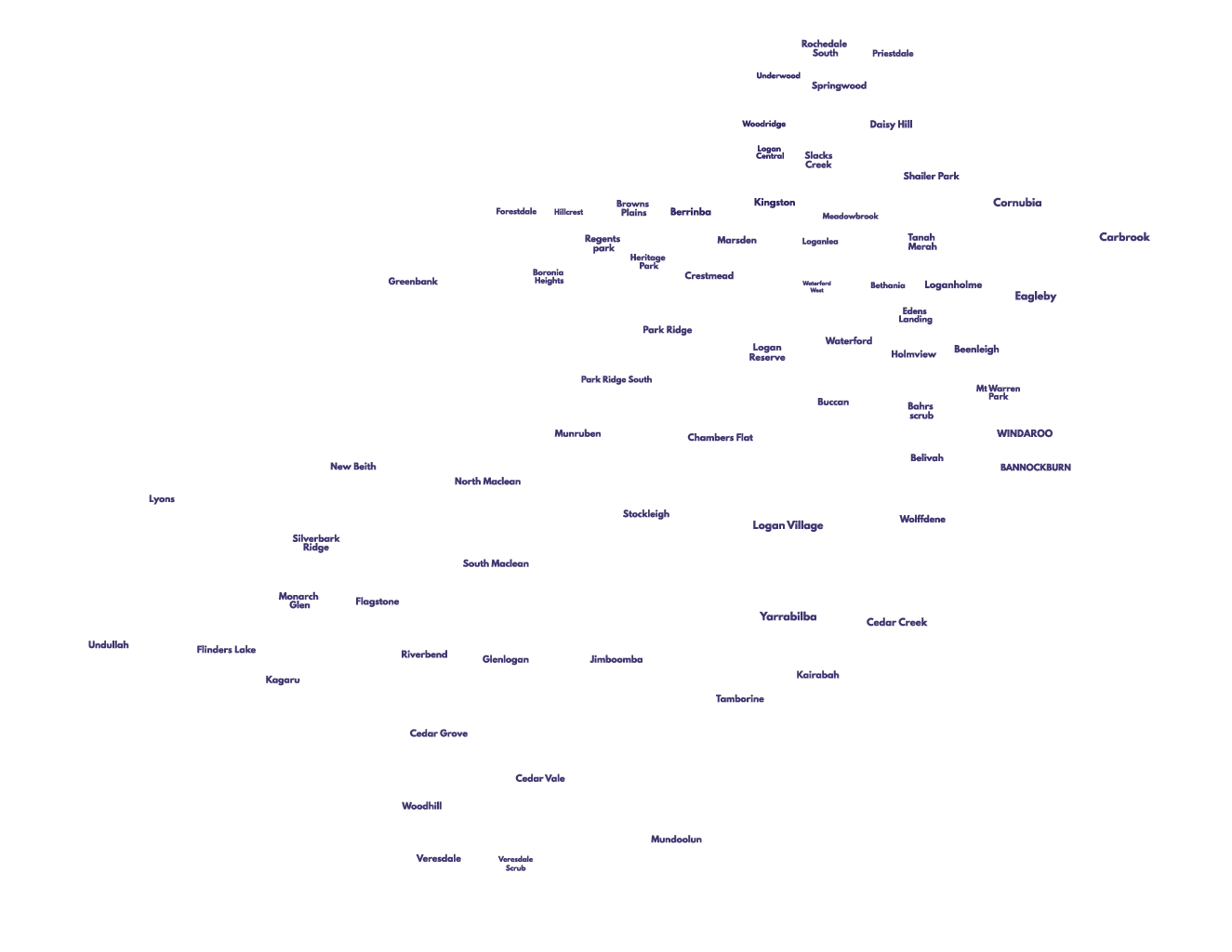
Who are the Focus Communities
Logan Together supports five Focus Communities unique yet connected through the Logan Together Backbone Team and a Focus Community Network.
Three Focus Communities are geographic – identified by place, and Two Focus Communities are cultural – cultural connections that are woven throughout Logan.
Tap an area to highlight it, then use the button to open its page.